A six-day Kenya safari suits travelers who want a focused route and substantial time in a few wildlife areas. Eight days adds a wider mix of habitats and the Maasai Mara. Fourteen days allows a deeper northern Kenya, Rift Valley and Mara circuit. Choose by the wildlife you most want to see, your tolerance for transfer days, and the time you can spend at each stop.
On a map, adding another destination can look irresistible. In a safari vehicle, the calculation changes. Every change of camp involves packing, checking out, traveling, checking in and learning a new landscape. A route with more park names can leave less time for the slow, absorbing work of watching wildlife.
That is why we compare itineraries by full safari days, not just calendar days. Our published 6-day Kenya safari focuses on Aberdare, Ol Pejeta and Samburu. Our 8-day Kenya safari travels from Nairobi to Samburu, Lake Nakuru and the Maasai Mara. The 14-day Kenya safari extends the journey across northern Kenya, the Rift Valley and the Mara. These are different route choices, not the same short safari with extra nights attached.
Kenya safari itinerary: 6, 8 or 14 days?
Decision factor
6 days
8 days
14 days
Published route
Nairobi → Aberdare → Ol Pejeta → Samburu → Nairobi
Nairobi → Samburu → Lake Nakuru → Maasai Mara → Nairobi
Nairobi, Ol Pejeta, Samburu, Mount Kenya, Lake Nakuru, Lake Naivasha and Maasai Mara
Nights
5
7
Confirm the exact night allocation in the final itinerary
Main strength
A focused northern Kenya experience
Northern wildlife, Rift Valley birdlife and classic Mara game viewing
A broader circuit with more opportunities to vary pace and experiences
Mara included?
No
Yes
Yes
Best suited to
Travelers drawn to rhinos, conservation and Samburu’s distinctive wildlife
First-time visitors who want contrasting habitats and the Mara
Travelers with time for a fuller Kenya journey
Main trade-off
No Mara on the published route
Several substantial road transfers
More total travel days and a larger overall trip commitment
The route and duration details above reflect our published six- and eight-day product pages and the published description of our fourteen-day circuit. Before booking, we confirm the exact fourteen-day night allocation, accommodation and transfer schedule in your tailored proposal.
There is no universal “ideal” safari length. Six days can feel generous when you concentrate on a few places; fourteen can feel rushed if you try to visit everything Kenya offers. The quality of the route matters more than the size of the number in its title.
What fits into a six-day safari?
Our six-day journey is deliberately not a compressed Maasai Mara safari. It travels north from Nairobi, beginning in Aberdare’s highland forest, continuing to Ol Pejeta Conservancy and ending with three nights in Samburu National Reserve. That final three-night stay is important: it gives you more than a quick introduction to Samburu before the return journey.
Aberdare offers a quieter beginning. Rather than racing straight into a full game-drive schedule, guests can watch for wildlife around the lodge waterhole and settle into the rhythm of the trip. Ol Pejeta then changes the emphasis to conservation, with rhino viewing and a visit to the chimpanzee sanctuary included in the published itinerary. Samburu brings a markedly different dry-country landscape along the Ewaso Nyiro River.
The route appeals to travelers interested in Kenya beyond its most familiar grasslands. In Samburu, the wildlife possibilities include Grevy’s zebra, reticulated giraffe, Beisa oryx, gerenuk and Somali ostrich, the animals often grouped as the “Samburu Special Five.” Sightings depend on conditions and the animals’ movements, but the chance to look for species associated with northern Kenya gives this journey a distinct identity.
Where the time goes
The six days include the outward journey from Nairobi, moves between Aberdare, Ol Pejeta and Samburu, and a return to Nairobi on Day 6. Our itinerary places three nights in Samburu, allowing full days for game drives and the planned Reteti Elephant Sanctuary visit. It also states that the journey uses a private 4x4 safari Land Cruiser and includes park entrance fees; some expenses, including international flights, drinks, gratuities and Day 6 lunch, are excluded.
That mix makes the six-day route a strong choice if you would rather know a smaller number of places well than make a brief appearance in every famous park. Its limitation is equally clear: the Maasai Mara is not included. If seeing the Mara is essential, choose a different route or ask us to redesign the itinerary rather than assuming two extra days can simply be added at the end.
Who should choose six days?
This is a particularly good fit for:
Travelers whose main interests are rhinos, conservation, and northern Kenya.
Repeat visitors who have already spent time in the Mara.
Families or couples who prefer a private, focused route.
Photographers drawn to contrasting forest and dry-country settings.
Guests with a firm six-day window who do not want to overpack it.
For a first safari, six days can absolutely be enough, provided the destinations match your priorities. If the Mara is the image that brought you to Kenya, our published eight-day route may be the more satisfying starting point.
What do eight days add?
Our eight-day itinerary is a different journey rather than an extension of the six-day product. It begins with a night in Nairobi, travels to Samburu for two nights, continues to Lake Nakuru, reaches the Maasai Mara for two nights, and returns to Nairobi before departure. It does not include Aberdare or Ol Pejeta on its published route.
The result is greater geographic variety. In Samburu, the landscape and wildlife introduce northern Kenya. Lake Nakuru provides Rift Valley scenery and birdwatching, alongside the possibility of seeing rhinos and other mammals. The Mara then brings open plains, predators, and the scale many first-time visitors hope to experience. Our published itinerary also includes a Maasai cultural visit and a nature walk.
Two additional days do not eliminate travel. This route moves between widely separated areas, and its Day 5 transfer into the Mara leaves one full game-drive day there before the return to Nairobi. If your sole priority is spending long, patient days in the Mara, we would discuss a more Mara-focused version rather than treating this route as the only eight-day option.
The advantage of contrast
For many first-time travelers, eight days offers a persuasive balance. The trip does not ask one destination to represent all of Kenya. Samburu’s dry-country setting, Nakuru’s lake landscape and the Mara’s grasslands each contribute something different.
That variety can be especially valuable for a group with mixed interests. One traveler may want big cats, another may care deeply about birds, and someone else may find the changing landscapes as memorable as the game drives. An eight-day circuit gives each interest a place without extending the holiday to two weeks.
The published eight-day package states that it uses an exclusively allocated tour Land Cruiser with guaranteed window seats, includes park and reserve entry fees, and provides bed and breakfast in Nairobi with full board on safari. International flights, drinks, laundry, gratuities, and specified optional activities are not included. We would confirm the final accommodation choices and the rate applicable to your group and dates before reservation.
Should you add more Mara time?
Possibly. If migration-season wildlife or Mara photography is the central purpose of your journey, the published allocation of two Mara nights deserves a closer look. An extra night can create more room for changing conditions and a less hurried game-viewing pace; it cannot guarantee a river crossing.
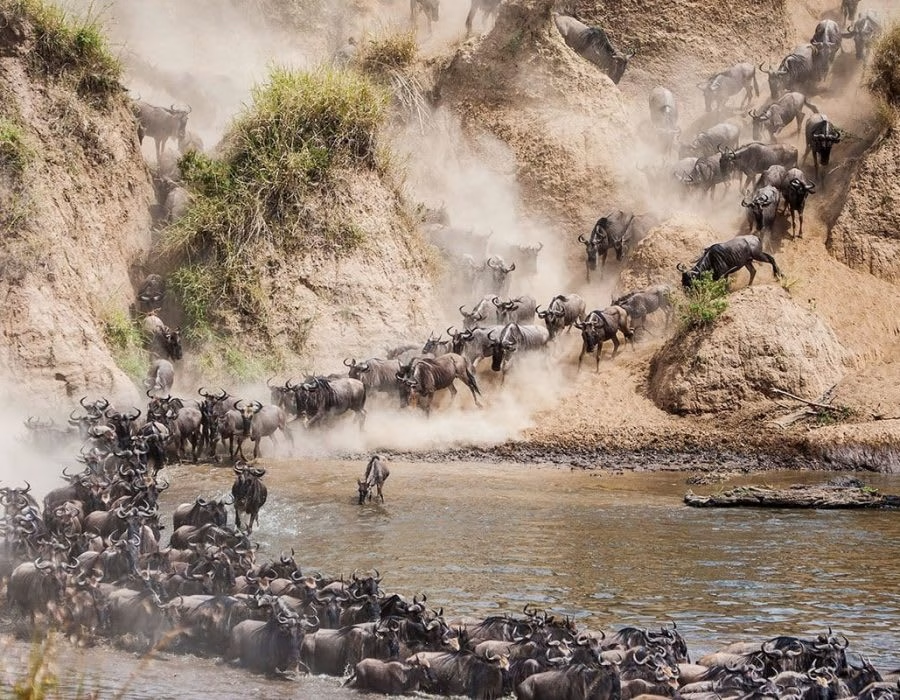
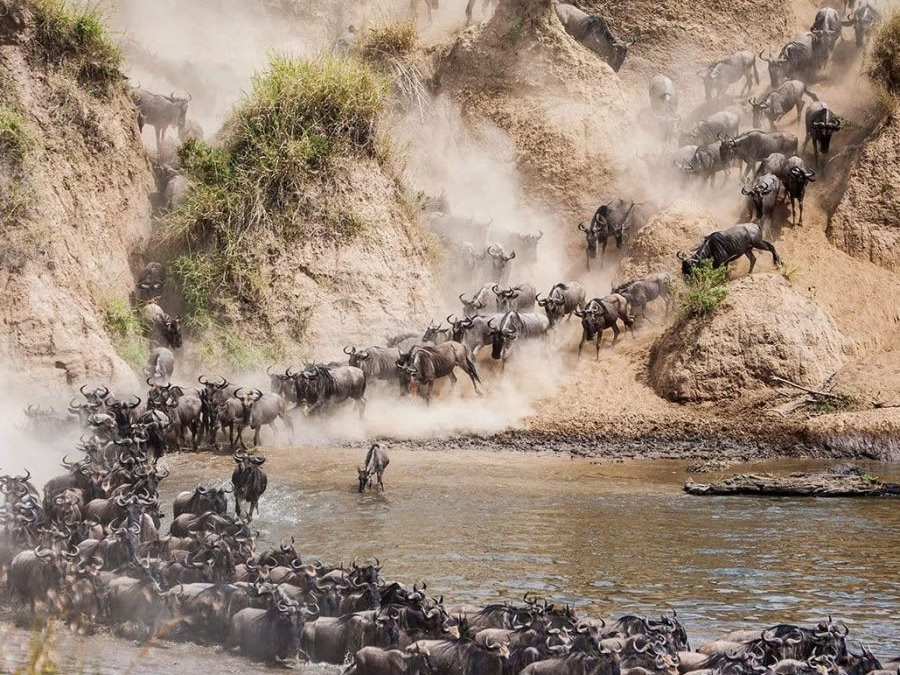
The Mara River migration phase is broadly associated with July through October, as the herds move in search of water and grazing. That seasonal window is useful for planning, but it is not a timetable for animal behavior.
Why fourteen days changes the journey
At fourteen days, you can begin to experience Kenya as a sequence of ecosystems rather than a shortlist of highlights. Our published fourteen-day circuit links Nairobi, Ol Pejeta, Samburu, the Mount Kenya area, Lake Nakuru, Lake Naivasha and the Maasai Mara. The attraction is not simply the number of stops: it is the opportunity to understand how different northern, highland, Rift Valley and Mara landscapes fit together.
Ol Pejeta brings a conservation focus. Samburu shifts the scene north. The Mount Kenya area adds a highland setting, while Nakuru and Naivasha give the Rift Valley more than a passing glance. By the time you reach the Mara, you have seen several very different versions of Kenya.
A fourteen-day itinerary also gives us more choices about pace. We can discuss where an additional night would add genuine value, where a road journey is part of the experience, and where a flight might spare you a tiring transfer. Those choices must be made against the actual route and your dates; a longer trip is not automatically relaxed if it has too many one-night stays.
More time should mean more depth
A common planning error is to see fourteen days as permission to add every available destination. That can produce a long list of park names but little time in any of them.
Instead, we ask what you want the additional days to accomplish. They might allow:
A slower start after an international arrival.
More than one full wildlife-viewing day in a priority area.
Time for a conservation visit, birding or another special interest.
A less demanding transfer schedule for children or older travelers.
A deliberate mix of lodge and tented-camp experiences.
Greater flexibility for photography and unhurried mornings.
For guests interested in the difference accommodation makes, our luxury tented camp versus safari lodge guide explains the practical trade-offs. On a longer circuit, the most rewarding choice may be a mix of both rather than the same style every night.
When fourteen days is worth it
Choose fourteen days if the journey itself is a major part of your holiday. The longer route particularly suits travelers coming to Kenya for a substantial once-per-trip break, people with varied wildlife interests, and guests who want the north, Rift Valley and Mara without reducing each to a photograph taken between transfers.
It can also suit families and photographers, but only when we plan the daily rhythm around them. A family may value a pool and a free afternoon more than another early start. A photographer may prefer an extra night in one location over a new destination. We tailor those decisions rather than assuming that more days should always mean more places.
If your available time includes the international flight into and out of Kenya, tell us that at the outset. “Fourteen days away” and “fourteen safari days on the ground” produce very different itineraries.
Compare total value, not headline price
A six-day package is not automatically cheaper per day, and a fourteen-day trip is not automatically better value. The routes differ, as do the accommodation possibilities, transport arrangements, group sizes and inclusions.
Our published six-day route is private and focused on Aberdare, Ol Pejeta and Samburu. The eight-day route covers Samburu, Lake Nakuru and the Mara, with a Nairobi night at each end. Comparing their displayed product prices without comparing those differences would not be a like-for-like assessment.
Ask these questions before deciding:
Question
Why it affects value
How many nights are spent in the places I most want to see?
A longer trip can still offer too little time in your priority park.
How many days involve a substantial transfer?
Transfers are necessary, but they reduce time available for game drives and rest.
Is the vehicle private or shared?
Vehicle arrangements affect flexibility, seating, and the final per-person quote.
Which meals are included?
A Nairobi hotel night may have a different meal basis from safari accommodation.
Are park and conservancy fees included?
These can materially change the total cost.
Which activities are included, and which are optional?
A listed experience is not necessarily part of the base rate.
Where are the camps located?
A convenient camp can save daily travel time to wildlife areas.
Are flights needed or useful?
Flying can save time but adds another cost and luggage requirements.
We also consider the cost of getting to Kenya. If your international travel consumes a substantial part of your overall holiday budget, staying longer may make that journey feel more worthwhile. But length should serve your interests, not become a reason to keep adding destinations.
For a fuller look at the transport decision, read our road safari versus fly-in safari to the Masai Mara comparison. The best transfer choice depends on the complete route, not the price of one flight.
Choose by the experience you want
The fastest way to choose is to start with a must-see list, and keep it short.
Choose six days if northern Kenya, Ol Pejeta’s conservation experiences and substantial Samburu time matter more to you than reaching the Mara. This is a focused private route, not a miniature version of a country-wide tour.
Choose eight days if you want Samburu, Rift Valley birdlife and the Mara in one published itinerary, and you are comfortable with the transfer days that connect them. It is an appealing first-safari route for travelers who value variety.
Choose fourteen days if you want a deeper circuit encompassing northern Kenya, the Mount Kenya area, the Rift Valley and the Mara, with room to discuss how much time each deserves. Ask us to confirm the exact night allocation before deciding whether the published route matches your preferred pace.
If none of those answers feels quite right, that is useful information. We can reshape the route, for example, spending longer in the Mara, reducing the number of stops or choosing flights for selected legs, rather than asking you to accept an itinerary built for somebody else.
Compare 6, 8 and 14-day itineraries
Tell us your available dates, whether those dates include international travel, your group size, and the three experiences you most want from Kenya. We will compare the relevant routes, identify where your time goes and provide a tailored quote with accommodation, transport, vehicle arrangements, fees and inclusions made clear.
Yes, if you want a focused experience and accept that you cannot see every region. Our published six-day route covers Aberdare, Ol Pejeta and Samburu, with three nights in Samburu; it does not include the Maasai Mara. If the Mara is essential to your first trip, ask us to compare another route.
How many parks should I visit in eight days?
Aim for a route that leaves time to experience each major stop. Our published eight-day itinerary combines Samburu, Lake Nakuru and the Maasai Mara, with Nairobi arrival and departure nights. Its variety is appealing, but the transfers are an important part of the schedule.
Does a fourteen-day safari feel too long?
Not when the route is paced around your interests and includes enough time in the destinations you care about. Fourteen days can feel rushed, however, if it becomes a string of one-night stays. We review the precise night allocation and travel days with you before recommending it.
Which itinerary length offers the best value per day?
There is no reliable answer without comparing dates, accommodation, transport, vehicle arrangements, fees and included activities. A focused six-day safari may give you more time in your preferred landscape; a longer journey may offer more variety. We provide a like-for-like quote so you can judge value by the experience, not only the daily rate.
Choose a Kenya-only safari for more wildlife time, simpler logistics, and deeper coverage of distinct ecosystems within 10–14 days. Choose a multi-country East Africa safari when a specific second-country experience - such as the Serengeti, Zanzibar or gorilla trekking—justifies extra flights, border formalities, and cost. Compare nights actually spent on safari, not the number of countries on your itinerary.
East Africa is not one safari experience. It is a collection of extraordinary landscapes, cultures and wildlife regions spread across several countries, each with its own parks, travel requirements, flight patterns and accommodation styles.
That variety makes a multi-country safari tempting. A traveler can imagine the Maasai Mara and Serengeti in the same journey, or pair a Kenya safari with a Zanzibar beach stay or gorilla trekking in Uganda or Rwanda. These combinations can be remarkable. They can also become rushed when too many destinations are fitted into too few days.
For most travelers with 10 to 14 days, the central decision is not whether one country is “better” than two. It is whether additional travel complexity will add a meaningful experience or simply reduce the time you have in the wilderness.
A Kenya-only itinerary can take you from the dry northern landscapes of Samburu to Ol Pejeta’s rhino conservation work, through the Rift Valley and into the Maasai Mara. A multi-country itinerary can bring together Kenya and Tanzania, add a beach extension, or connect a safari with a gorilla trek. The right choice depends on your priorities, pace, and budget.
Kenya-only vs multi-country: the 10–14-day comparison
Decision factor
Kenya-only safari
Multi-country East Africa safari
Travel pace
More relaxed, with fewer flight, road, and border transitions
Faster-paced, with more moving parts between destinations
Wildlife depth
Time to experience Kenya’s varied ecosystems in greater detail
Broader regional variety, but fewer nights in each individual area
Logistics
One set of entry requirements, one primary operating structure and fewer transfers
Additional flights, border procedures, travel documents and supplier coordination
Ideal length
Excellent for 8–14 days
Best from 12–14 days; shorter trips need tight focus
Best for
First-time safari travelers, families, photographers and guests who value a slower rhythm
Repeat safari guests or travelers with one specific second-country priority
Cost drivers
Accommodation, private guiding, park fees, domestic flights and road transfers
All Kenya cost drivers plus regional flights, additional park fees, visas or entry approvals and cross-border transfers
Sample highlights
Samburu, Ol Pejeta, Lake Nakuru, Lake Naivasha, Amboseli and Maasai Mara
Kenya plus Serengeti, Ngorongoro, Zanzibar, Uganda or Rwanda
Main risk
Trying to include too many Kenyan parks
Losing too much safari time to flights, border crossings and one-night stays
A Kenya-only itinerary is not a compromise. Kenya has the range to fill two weeks with genuine variety: elephant country below Mount Kilimanjaro in Amboseli; rare northern species in Samburu; rhino conservation in Ol Pejeta; Rift Valley lakes; and the Maasai Mara’s grasslands and big-cat viewing.
A multi-country safari becomes worthwhile when the second country adds something Kenya cannot provide in the same way. The Serengeti’s vast plains, Zanzibar’s Indian Ocean coast, and gorilla trekking in Uganda or Rwanda are all strong reasons to expand the map—but only when there is enough time to experience them properly.
What a deeper Kenya safari can include
Kenya rewards travelers who stay long enough to move beyond the most familiar itinerary. The Maasai Mara is essential for many first-time visitors, particularly during the July-to-October migration period, but it is only one part of the country’s safari story.
A well-paced 10- to 14-day Kenya safari can connect several contrasting regions without turning every other day into a transfer day.
Northern Kenya: Samburu and the arid north
Samburu offers a dramatic contrast to the Mara. The landscape is drier, more rugged and shaped by the Ewaso Nyiro River. It is known for species that are less commonly encountered farther south, including Grevy’s zebra, reticulated giraffe, Somali ostrich, gerenuk and Beisa oryx.
For travelers who want wildlife variety rather than a single migration-focused safari, the north gives a Kenya itinerary greater depth. It is particularly rewarding for photographers, repeat safari guests and travelers interested in landscapes as much as large concentrations of animals.
Ol Pejeta: conservation and rhino
Ol Pejeta adds a conservation dimension to a Kenya journey. It is a strong choice for guests interested in rhino, chimpanzee conservation, private conservancy management and a different style of game viewing from the Mara.
It can also break up a road route between Nairobi and northern Kenya, or fit naturally into a fly-in circuit. For families and multigenerational groups, this variation in habitat and activity can make a longer itinerary feel more balanced.
The Rift Valley: lakes, birdlife and a change of pace
Lake Nakuru, Lake Naivasha and surrounding Rift Valley landscapes introduce another side of Kenya: lakeshore scenery, birdlife, boat excursions, walking opportunities in appropriate areas and a welcome visual change from open savannah.
Not every itinerary needs all of these locations. The aim is not to collect parks. It is to create contrast while giving each stop enough time to be meaningful.
Amboseli: elephants and Kilimanjaro views
Amboseli is a compelling addition for travelers who want to see large elephant herds against the backdrop of Mount Kilimanjaro when conditions allow. It pairs particularly well with the Maasai Mara for a first Kenya safari because the landscapes, wildlife viewing and photographic opportunities feel distinct.
Maasai Mara: big cats and migration-season drama
The Maasai Mara remains one of the most compelling conclusions to a Kenya circuit. It offers open grasslands, abundant resident wildlife and some of East Africa’s most celebrated big-cat viewing.
During the annual migration period, typically associated with July to October in the Mara, it may also host large herds of wildebeest and zebra moving through the wider ecosystem. River crossings remain unpredictable, however. They are driven by herd movement, rainfall, water levels and animal behavior—not by an itinerary date.
Our 14-day Kenya safari shows what a deeper country-wide circuit can look like, linking Nairobi, Ol Pejeta, Samburu, Mount Kenya, Lake Nakuru, Lake Naivasha and the Maasai Mara. This is the kind of route that gives each ecosystem a clear role rather than treating Kenya as a brief stop before moving on.
When a second country adds real value
A multi-country East Africa safari should begin with a specific reason to cross a border.
“Seeing more countries” is not, by itself, a good enough reason. The strongest itineraries are built around experiences that are genuinely distinct and personally important.
Kenya and Tanzania: Mara, Serengeti and Ngorongoro
A Kenya-and-Tanzania itinerary is the most natural multi-country safari combination. The Maasai Mara and Serengeti are connected ecosystems, but they are not interchangeable. The Serengeti offers exceptional scale and different seasonal migration perspectives, while the Ngorongoro Conservation Area brings a distinctive crater setting and a different wildlife-viewing rhythm.
This route is best for travelers who:
Have at least 12 to 14 days available
Want to experience both sides of the wider migration ecosystem
Are comfortable with additional flights or a cross-border road transfer
Are prepared for higher total costs and more logistical detail
Value a broader regional story over a slower Kenya-only itinerary
A 10-day Kenya-and-Tanzania safari can work, but only if it is tightly focused. Attempting Nairobi, Amboseli, Maasai Mara, Serengeti, Ngorongoro and Zanzibar in 10 days usually creates too many transitions and too few full safari days.
The Serengeti borders Kenya’s Maasai Mara to the north, allowing wildlife to move through the wider ecosystem during the migration. That ecological continuity is one reason the combination is compelling—but it does not remove the practical travel steps required for guests crossing from Kenya into Tanzania.
Kenya and Zanzibar: safari plus beach
A Kenya-and-Zanzibar itinerary is ideal for travelers who want to end a wildlife-focused holiday with several nights by the ocean. This is particularly popular for honeymooners, couples, and guests who prefer a balance between early safari mornings and unstructured beach time.
The key is to protect the safari portion of the trip. We generally recommend at least six to eight nights in Kenya before adding a beach stay, depending on how many regions you hope to cover. A three-night safari followed by a long beach extension can be enjoyable, but it is not the same as a deeper East Africa safari.
Kenya and Uganda or Rwanda: safari plus gorillas
Gorilla trekking is one of the clearest reasons to build a multi-country East Africa itinerary. It is not a substitute for a savannah safari; it is a wholly different wildlife encounter involving forest terrain, permits, hiking, and a more physically demanding day.
For travelers who value wildlife diversity and have 12 to 14 days, Kenya plus Uganda or Rwanda can be exceptional. But it needs careful planning around internal flights, trekking permits, fitness level, and luggage.
The East African Tourist Visa can simplify entry for eligible travelers visiting Kenya, Uganda and Rwanda. It is valid for tourism travel between those three countries for up to 90 days and costs USD 100, but it does not include Tanzania. Travelers must apply through the country of first entry and should always confirm requirements for their passport before booking.
Two routes, compared honestly
The following examples show how a 14-night holiday can be allocated. They are planning patterns, not fixed packages; we will tailor camp selection, vehicle format and flight arrangements around your dates and priorities.
Option 1: A 14-night Kenya-only circuit
Destination
Suggested nights
Why it earns its place
Nairobi
1
International arrival, recovery and a smooth start
Samburu
3
Northern landscapes and specialist wildlife
Ol Pejeta
2
Rhino conservation and varied conservancy experience
Lake Nakuru or Lake Naivasha
2
Rift Valley scenery, birdlife and a change of pace
Maasai Mara
4
Big cats, open plains and extended game-viewing time
Nairobi
1
International departure buffer
Flexible routing or extra Mara / Amboseli night
1
Protects pace and allows the route to reflect the traveler’s priorities
This itinerary provides room for full game-drive days rather than treating each destination as a one-night stop. It also makes it easier to adjust transport: road travel can work on selected sections, while domestic flights can be used where they save substantial time.
Option 2: A 14-night Kenya and Tanzania safari
Destination
Suggested nights
Why it earns its place
Nairobi
1
Arrival and pre-safari night
Maasai Mara
3
Kenya’s classic grassland safari experience
Transfer / regional flight
1
A realistic allowance for cross-border logistics
Serengeti
3
Broad plains and a different migration ecosystem perspective
Ngorongoro / Karatu
2
Crater access and a change of landscape
Zanzibar
3
Beach extension and time to slow down
Departure routing
1
Ensures the journey does not rely on an unrealistic same-day international connection
The second itinerary is broader, but it has fewer full wildlife days in each area. It works for guests whose priority is the combination of Mara, Serengeti, Ngorongoro and coast. It is not automatically superior to the Kenya-only route; it simply answers a different travel ambition.
What changes the quote?
A multi-country itinerary is usually more expensive than a Kenya-only safari, but the size of the difference varies significantly.
The major cost drivers are not only accommodation rates. They include the number of domestic or regional flights, park and conservancy fees, one-way vehicle transfers, entry authorizations, private guiding, room category and the number of nights spent at high-demand properties.
Kenya-only cost drivers
Camp or lodge level and location
Private versus shared vehicle
Domestic flights versus road transfers
Park and conservancy fees
Number of destinations and transfer distances
Room category, family arrangements and single supplements
Optional experiences such as ballooning, guided walks or cultural visits
Multi-country cost drivers
All Kenya-only factors, plus:
Regional flights or cross-border road transfers
Separate park fees and conservation fees in each country
Additional guiding teams, vehicles and operating partners
Visas, electronic travel authorizations or permits
Gorilla permits, where relevant
One-way routing and additional baggage considerations
Extra arrival or departure nights required to make the route sensible
Entry rules can change. Kenya requires most international visitors to obtain an approved Electronic Travel Authorization before travel, with specific exemptions and eligibility rules. We will guide you on the planning process, but each traveler remains responsible for meeting the current requirements for their own nationality and passport.
Do you lose safari time at borders?
You can, especially on an itinerary that relies on overland cross-border travel.
The issue is not merely time spent at immigration. It includes packing, departure from camp, road distance to the border, formalities, changing vehicles or guides where necessary, onward driving, and arrival procedures at the next accommodation. Even a smoothly managed transfer can consume a meaningful part of the day.
That does not mean overland border travel should be avoided. It can be a practical and scenic option for the right itinerary. But it should be treated honestly as a transfer day—not marketed as a full game-drive day with a quick border stop in the middle.
For travelers with limited time, regional flights can protect more safari hours. They increase the cost but often create a more relaxed journey. We assess this trade-off case by case.
Which option is better for a first safari?
For most first-time visitors with 10 to 14 days, we recommend a Kenya-only safari.
Kenya provides enough variation to make a first safari feel comprehensive: multiple ecosystems, varied wildlife, conservation experiences, high-quality camps and lodges, and the option to combine road travel with bush flights. A deeper Kenya itinerary also gives you time to understand the rhythm of safari—early starts, long quiet wildlife sightings, changing weather, camp life and the pleasure of not needing to rush onward every morning.
A multi-country route is the stronger choice when the second country contains a true priority:
You have always wanted to see the Serengeti.
A Zanzibar beach stay is essential to your holiday.
Gorilla trekking is a must, not an optional add-on.
You are returning to East Africa and want a broader regional comparison.
You have 14 days or more and are comfortable paying for extra logistics.
How we design the right East Africa safari
We begin with what matters most to you, not with a pre-set list of countries.
Tell us whether your priority is migration wildlife, big cats, elephants, rare northern species, conservation, photography, gorilla trekking, a beach extension, family travel or a relaxed luxury pace. We will then recommend the number of countries that adds value rather than complexity.
Choose a Kenya-only safari if you want deeper wildlife time, fewer transitions and a varied 10- to 14-day itinerary that does not feel rushed.
Choose a multi-country East Africa safari if a specific experience in Tanzania, Uganda or Rwanda is important enough to justify additional transfers, costs and planning.
A better safari is not the one that crosses the most borders. It is the one that gives you enough time in the landscapes and wildlife areas you care about, with realistic transfer days and the right standard of guiding and accommodation.
Share your travel dates, group size, budget range, and must-have experiences with us. We will build a clear Kenya-only and multi-country option where appropriate, showing the nights, flights, transfer requirements, inclusions and trade-offs before you decide.
Contact our safari specialists to compare tailored Kenya and East Africa safari itineraries, or message us on WhatsApp to begin planning.
FAQs
Is 10 days enough for Kenya and Tanzania?
It can be, but only with a focused itinerary. A well-designed 10-day trip might combine the Maasai Mara with the Serengeti and Ngorongoro, but it will involve several transfers and fewer nights in each location. For a more relaxed Kenya-and-Tanzania experience, we recommend 12 to 14 days.
Is a multi-country safari much more expensive?
Usually, yes, because regional flights, additional park fees, border logistics, extra guide and vehicle arrangements, and one-way routing add cost. The final difference depends on accommodation level, season, travel style, and the countries included. We will provide a like-for-like comparison rather than a headline price alone.
Do travelers lose safari time at the Kenya–Tanzania border?
They can. Border travel includes road transfers, immigration procedures, possible vehicle or guide changes, and onward travel to the next camp. It should be planned as a genuine transfer day. Flights can reduce travel time but may increase the overall itinerary cost.
Which option is better for a first safari?
For most first-time travelers with 10 to 14 days, a Kenya-only safari offers better depth, simpler logistics, and more time in wildlife areas. A multi-country safari is the better choice when you have a specific priority—such as the Serengeti, Zanzibar or gorilla trekking - that Kenya alone cannot provide.
A fly-in safari is usually worth the upgrade when time, comfort and extra game-drive hours matter more than the lowest total price. A road safari offers better value for travelers who enjoy the changing Kenyan landscape and want to include several destinations in one journey. The right choice depends on your available days, budget, luggage and preferred pace.
The Masai Mara is one of Kenya’s most rewarding wildlife destinations, but getting there shapes the entire safari. You can travel by road from Nairobi through the Great Rift Valley and Narok, or fly from Nairobi’s Wilson Airport to one of the Mara’s bush airstrips.
Neither option is automatically better. A road safari can become part of the adventure, offering landscapes, cultural context and the flexibility to connect destinations. A fly-in safari protects your time, reduces long transfer days and can make a short itinerary feel substantially more relaxed.
Road vs fly-in safari: the answer at a glance
Decision factor
Road safari to the Masai Mara
Fly-in safari to the Masai Mara
Journey time
Usually around 5–7 hours from Nairobi, depending on route, traffic, weather and camp location
Flight time is generally about 45–60 minutes, plus airport, airstrip and camp-transfer time
Starting point
Hotel or airport in Nairobi
Wilson Airport in Nairobi
Experience
A scenic overland journey through the Rift Valley and Narok
Aerial views and a faster transition from city to bush
Game-drive time
Can reduce first- and last-day wildlife time on a short itinerary
Usually preserves more time for game drives
Luggage
More flexible capacity, subject to vehicle space
Often restricted on light aircraft; soft bags are usually required
Best for
Longer Kenya circuits, value-conscious travelers and those who enjoy road travel
Short stays, luxury travelers, families, photographers and guests with limited time
Cost
Typically lower transport cost
Usually higher because of domestic flights and airstrip transfers
Ideal itinerary length
Five nights or more, especially for multi-park routes
Two to five nights in the Mara, or any itinerary where time is limited
The road distance between Nairobi and the Mara varies by gate and camp location. Planning guidance commonly estimates around 5.5–6.5 hours to many Reserve access points, with longer journeys for western areas such as the Mara Triangle. Scheduled flights from Wilson Airport commonly take around 45–60 minutes, although the full door-to-camp journey includes check-in, airstrip arrival and onward camp transfer.masaimara+1
Choose a road safari if the journey matters
A road safari begins before you reach the Masai Mara. Leaving Nairobi, the route typically passes through the Great Rift Valley, descends toward Narok and continues across landscapes that show Kenya changing beyond the capital.
For some travelers, this is not simply a transfer. It is part of the story of the safari.
The value of an overland Kenya journey
Road travel can be especially rewarding if you have enough time to enjoy it. You can connect the Mara with destinations such as Lake Naivasha, Lake Nakuru, Amboseli, Samburu or Ol Pejeta without repeatedly returning to an airport.
A well-paced overland itinerary creates a sense of progression. You see the country’s landscapes shift, stop for breaks when appropriate and arrive at the Mara with a better understanding of the distance and diversity between Kenya’s ecosystems.
You have at least five or six nights available for Kenya
You want to visit more than one park or conservancy
You prefer to allocate budget toward more nights or a higher camp category
You are comfortable with a long travel day
You enjoy landscapes, roadside stops and the feeling of a classic overland journey
You have luggage that would be inconvenient on a light aircraft
Road travel can be particularly practical for families or groups who have booked a private safari vehicle. The vehicle remains with your party, allowing luggage flexibility and more control over stops, subject to route timing and safety considerations.
What the road journey feels like
The reality of the drive should be clear before you book. A road transfer to the Mara is not a short airport run. It is a substantial journey that can be affected by Nairobi traffic, weather, road conditions, comfort breaks and the location of your lodge or camp.
The route is generally manageable in a proper safari vehicle, but it should not be presented as effortless. Travelers who dislike long drives, have limited mobility, are traveling with very young children or only have two nights in the Mara may find that flying offers significantly better value.
A road safari is best when you embrace the journey rather than simply endure it.
Choose a fly-in safari to protect your time
A fly-in safari Kenya itinerary is designed around one valuable resource: time in the wilderness.
Instead of spending most of a day on the road, you travel from Wilson Airport in Nairobi to a Mara airstrip, where our driver-guide or camp team meets you for the onward transfer. In many cases, that transfer becomes the beginning of your first game drive.
The flight itself is short, but its effect on a brief safari can be considerable. On a two- or three-night Masai Mara stay, avoiding two long road-transfer days can create more time for early mornings, relaxed lunches, afternoon drives and camp experiences.
Who benefits most from flying?
A fly-in itinerary is often worth considering for:
Travelers with only two to four nights in the Masai Mara
Honeymooners and couples prioritizing a relaxed pace
Families who want to minimize long road days
Photographers who want to maximize time on game drives
Travelers combining the Mara with beach time or another East African destination
Guests who prefer comfort and efficient transfers
Anyone arriving in Kenya on a limited schedule
Flying does not make a safari inherently more luxurious. The camp, guide, vehicle arrangement and itinerary design still matter. But flying can make the trip feel more spacious because less of your holiday is spent in transit.
What to expect from Mara flights
Scheduled light-aircraft services to the Masai Mara generally depart from Wilson Airport, not Jomo Kenyatta International Airport. This means international travelers should allow adequate transfer time between airports when connecting from a long-haul arrival.
Luggage is one of the most important practical differences. Many Mara light-aircraft services operate with a 15-kilogram allowance that includes hand luggage, and they generally require soft-sided bags rather than hard suitcases.wilsonairport+1
Before finalizing your itinerary, ask us to confirm:
Your airline, airstrip and scheduled departure time
Current luggage allowance and soft-bag requirements
Whether camera equipment is counted within the allowance
The cost and availability of extra luggage arrangements
Airport-to-airport transfer time in Nairobi
The drive time from the Mara airstrip to your camp
What happens if weather or operational changes affect the schedule
Airline baggage and schedule terms can change, so we will confirm them for your actual travel date rather than relying on a general allowance.
Which option offers better value?
The better value option is the one that gives you the right balance of time, comfort and experience—not simply the lower upfront transport price.
For a two- or three-night Mara stay
Flying is often the stronger choice. On a short safari, two long road-transfer days can account for a large share of the itinerary. A fly-in plan can preserve more time for wildlife viewing and reduce fatigue.
For example, our 3-day Maasai Mara luxury tented-camp package can be adapted around road or air transport depending on your dates, accommodation preference and budget. We will confirm which format gives you the most meaningful time on safari.
For a five- to eight-night Kenya safari
The answer becomes more balanced. If your route includes the Mara plus destinations in the Rift Valley, a road circuit may be both practical and rewarding. If the itinerary covers long distances or includes northern Kenya, domestic flights can reduce travel fatigue and protect more time in each destination.
A combination can work well: drive one direction and fly the other, or use road travel through the Rift Valley before flying to a more distant region.
For a ten-night or longer itinerary
Longer safaris give you room to be more selective. You can include road segments where the landscape and route add value, then use flights where overland transfers would become tiring or consume too much of the trip.
This is often the best approach for travelers who want both depth and efficiency. Rather than declaring the whole journey road-only or air-only, we build each transfer around the actual itinerary.
Road versus fly-in: comfort and accessibility
Comfort means different things to different travelers.
For some, comfort is sitting in a spacious safari vehicle with a familiar guide, seeing Kenya unfold through the window and stopping when needed. For others, comfort is avoiding a long drive and arriving at camp quickly enough for an afternoon game drive.
When choosing, consider:
Your tolerance for long drives
Your age, health and mobility requirements
Whether you are traveling with young children
Whether anyone in the group experiences motion sickness
Your luggage requirements
How many nights you have in the Mara
The distance between your planned camp and its nearest airstrip
Whether you would rather spend budget on transport, accommodation or additional nights
Kenya Wildlife Service park rules require visitors to follow road guidance, respect entry and exit times and avoid unsafe behavior in protected areas. A responsible itinerary accounts for these practical limits rather than promising unrealistic transfer and game-drive schedules.
The costs that change your quote
A road safari and fly-in safari should be compared on total trip value. Ask us for a clear, like-for-like itinerary that identifies the factors driving the difference.
Road-safari cost factors
Private or shared safari vehicle
Fuel, driver-guide and road-transfer time
Route length and number of destinations
Accommodation location relative to park gates
Park or conservancy fees
Number of nights required to make the transfer worthwhile
Fly-in-safari cost factors
Scheduled domestic flight fare
Airstrip and camp transfers
Luggage arrangements or additional baggage
Camp location relative to the airstrip
Private vehicle requirements at the destination
Nairobi airport transfers, if applicable
The most useful comparison is not “road safari price versus flight price.” It is:
How many hours will I spend traveling, how many game drives will I gain or lose, and what experience am I paying for?
Can you fly one way and drive the other?
Yes. A one-way fly-in or fly-out itinerary is often an excellent compromise.
Flying into the Mara can protect your first day and give you immediate access to the bush. Driving back can reduce the total cost while allowing you to experience the Rift Valley route. The reverse may work for travelers who prefer a relaxed road journey at the start and a quick return to Nairobi before an international flight.
The best direction depends on your international schedule, camp check-in and check-out times, road-transfer tolerance and planned onward travel.
How we plan the right Mara transfer
We begin with the full itinerary, not a generic recommendation.
We consider your arrival and departure flights, number of safari nights, preferred camps, budget, luggage, group size and whether your priority is a seamless luxury experience, a scenic road journey or the highest possible ratio of wildlife time to transfer time.
Choose a road safari if you have time, enjoy overland travel and want to build a wider Kenya circuit.
Choose a fly-in safari if your Mara stay is short, your time is limited or comfort and game-drive time are your main priorities.
Choose a road-and-air combination if you want the best balance of cost, scenery and efficiency.
Compare Road and Fly-In Masai Mara Itineraries
Contact our safari specialists or message us on WhatsApp. We will prepare a tailored itinerary showing realistic transfer times, current flight options, baggage requirements and the total value of each travel format.
FAQs
How much time does flying save between Nairobi and the Masai Mara?
The flight is generally around 45–60 minutes from Wilson Airport to a Mara airstrip, although you should also allow time for airport check-in, airstrip transfers and the drive to camp. Road travel from Nairobi commonly takes around 5–7 hours, depending on the route, traffic, weather and camp location.masaimara+1
What luggage limits apply on Masai Mara flights?
Many scheduled light-aircraft services use a 15-kilogram allowance including hand luggage and require soft-sided bags. Allowances can differ by airline and route, so we will confirm the exact requirement before you travel.wilsonairport+1
Can I fly one way and drive the other?
Yes. A one-way flight can be an effective compromise, allowing you to save time in one direction while still enjoying an overland Kenya journey in the other.
Is a road safari comfortable for children or older travelers?
It can be, particularly in a well-maintained private safari vehicle with sensible breaks and a well-paced itinerary. However, a fly-in safari may be more comfortable for travelers who dislike long drives, have limited mobility or are visiting the Mara for only a short stay.
Book a private safari if your group values flexible start times, photography time, child-friendly pacing, or exclusive use of the vehicle. Choose a small-group departure if reducing the per-person cost matters most and fixed dates are acceptable. Before booking either option, compare the group size, seating arrangement, guide access, and what is genuinely included.
Wildlife does not become better simply because a safari is private. Lions, elephants, cheetahs and wildebeest do not distinguish between vehicle types. What changes is your control over the day: when you leave camp, how long you remain with a leopard in a tree, whether you pause for a child’s breakfast or wait for the light to improve.
A small-group safari can be a smart way to see Kenya while sharing vehicle and guiding costs. A private safari can offer stronger value when flexibility, personal space and a tailored itinerary matter more than the lowest headline price.
Private vs group safari Kenya: the decision in one table
Decision factor
Private Kenya safari
Small-group Kenya safari
Vehicle
Reserved exclusively for you and your travel party
Shared with other travelers on the same departure
Daily pace
Your party determines departure times, stops, and sighting duration within park rules
The schedule must work for the entire group
Guide attention
The guide focuses on your party’s priorities and questions
The guide’s time and attention are shared
Per-person cost
Usually higher for one or two travelers
Usually lower because core costs are shared
Families
Flexible around children, meals, rest times and interests
Depends on group composition and itinerary pace
Photography
More control over vehicle positioning and time at sightings
Less control when guests have different priorities
Social experience
Time shared only with your own party
Opportunity to meet and travel with other guests
Best for
Families, photographers, couples, friends and specialist travelers
Solo travelers, budget-aware couples and social travelers
The best choice is not automatically private or group. It is the format that matches the way you want to travel.
A private safari generally means your travel party has exclusive use of a vehicle and driver-guide. A small-group safari usually means you share a vehicle, guide, and planned route with other guests. The quality of either experience depends on the guide, vehicle, camps, route and group size—not just the wording on a package page.
When a private safari is better value
A private Kenya safari is not solely about exclusivity. For many travelers, it is a practical way to protect time, comfort and flexibility.
Families and multigenerational groups
A private vehicle allows a family to follow its own rhythm. You can start early, return to camp for a rest, stay longer with an elephant herd or adapt the day around children’s energy levels.
This flexibility also helps multigenerational groups. One traveler may want a dawn game drive, while another may prefer a slower morning. With a private guide, we can shape the itinerary around your party’s interests and practical needs, while respecting camp schedules and park regulations.
For a broader itinerary, compare our 8-day Kenya safari and 14-day Kenya safari. The longer the journey and the more destinations involved, the more valuable a private vehicle can become.
Photographers and wildlife enthusiasts
A private safari gives photographers more control over the game drive. Your guide can position the vehicle carefully, wait for an animal to change direction or allow time to work with changing light.
Wildlife remains unpredictable, of course. A private safari cannot guarantee a leopard sighting, a hunt or perfect light. But it can give you the time to be patient when an important moment is developing.
Kenya Wildlife Service guidance emphasizes respectful viewing practices, including staying on established routes, maintaining a safe distance from wildlife and avoiding disturbance to natural animal behavior. Within those rules, a private vehicle can make a real difference to your viewing experience.
Couples and special occasions
For honeymooners, anniversary travelers and couples who want quiet time together, a private safari can create a more personal experience. You have your own vehicle, your own game-drive rhythm and more freedom to choose where to spend your time.
It can also make it easier to build a tailored route: a private conservancy stay, a fly-in extension, an extra night in the Maasai Mara or a slower-paced itinerary that combines safari with time at the coast.
Our Private Safari glossary explains the format. The important consideration is whether that independence improves the holiday you want to have.
Groups of friends
Private travel can become much better value as the number of travelers increases. A group of four, five or six friends can share vehicle and guide costs while keeping all the flexibility of a private safari.
Ask us to quote both a private and small-group option. We will show the true cost difference, including accommodation, park fees, transfers and vehicle arrangements, so you can make an informed choice.
When a small-group safari is better value
A small-group safari is not a second-best experience. It can be an excellent way to see Kenya, particularly for travelers who are happy to share the journey and would rather allocate budget to more nights, better accommodation or additional destinations.
Solo travelers
Small-group departures can work especially well for solo travelers because vehicle and guiding costs are divided among participants. They also bring a built-in social element, from the first game drive to evening conversations at camp.
Before booking, ask whether a single supplement applies to accommodation. A low group-tour rate may look different once a solo room cost is added.
Couples with a set budget
For some couples, the choice is between a short private safari and a longer small-group itinerary. In many cases, the longer safari provides better overall value.
More nights give you more opportunities to see wildlife, experience different landscapes and allow for the unexpected moments that make a safari memorable. A small-group itinerary can make those extra nights possible without stretching the budget too far.
Travelers who enjoy meeting people
Some guests enjoy sharing wildlife sightings and camp conversations with people from different countries and backgrounds. For solo travelers in particular, a small-group departure can create a friendly and engaging journey.
The essential point is to verify what “small group” means. It should not be a vague marketing term. You should know the expected number of guests, vehicle layout and trip structure before you reserve a place.
Our Group Safari glossary explains the basic format, but the questions below will help you assess the actual quality of a departure.
Questions to ask before booking
A private or small-group safari can both be excellent. The detail of the itinerary determines which is right for you.
Is the group departure guaranteed?
A scheduled departure may require a minimum number of travelers before it can operate. Ask whether the departure is confirmed, how many guests are booked and what happens if the required group size is not reached.
How many people share the vehicle?
Do not book a “small-group” safari without receiving a clear answer to these questions:
What is the maximum number of guests in the vehicle?
Does each traveler have a window seat?
What type of vehicle will be used?
Is there sufficient room for luggage and camera equipment?
Are children welcome, and are there age restrictions?
Will the same guide stay with the group throughout the journey?
The number of guests in a vehicle affects comfort, visibility and the ability to respond to individual interests.
How flexible is the itinerary?
On a private safari, we can customize the route, accommodation choices and daily rhythm around your party, subject to live availability and park rules. On a small-group safari, the itinerary is more structured because the whole group travels together.
This does not make one format better than the other. It simply means you should choose intentionally.
What is included in the quote?
Compare safari quotes line by line. Confirm whether the rate includes:
Accommodation and meal plan
Park and conservancy fees
Domestic flights and airstrip transfers
Private or shared vehicle use
Driver-guide services
Drinking water and other drinks
Optional activities, including balloon safaris or guided walks
Single supplements, gratuities and other exclusions
Deposit, balance and cancellation terms
Kenya’s legal framework treats park, reserve and sanctuary entry fees as time-limited access fees, so ask us to clarify whether they are included and whether they are subject to official changes.
Is the safari operator properly licensed?
Price should never be the only deciding factor. Ask about guide experience, vehicle standards, emergency support, supplier relationships and licensing.
Kenya’s Tourism Regulatory Authority states that tourism businesses and services covered by the Tourism Act require a valid licence. We encourage travelers to ask direct questions and choose an operator that provides transparent answers.
Match the format to your priorities
A private safari is often the best fit when you value control over your time. It suits guests who want to set the daily rhythm, concentrate on photography, travel with children, celebrate a special occasion or explore multiple destinations at a relaxed pace.
A small-group safari is often the better choice when you want to share costs, enjoy a social atmosphere and follow a structured itinerary. It can allow you to spend more nights on safari or choose a higher accommodation standard within the same overall budget.
For a focused wildlife experience, our Maasai Mara guide can help you understand the destination before choosing your itinerary format. For travelers looking at several regions, our Kenya safari packages offer a useful starting point.
How we help you choose
We do not recommend a private safari to every traveler, and we do not recommend a small-group safari solely because the price is lower.
Instead, we compare the factors that affect your actual experience:
Your travel dates and group size
Accommodation preferences and room configuration
Preferred Kenya destinations
Private versus shared vehicle costs
Photography, family or accessibility needs
Flight and road-transfer preferences
Budget range and desired trip length
Whether you prefer a fixed or flexible itinerary
A private safari is usually better value when the freedom to shape each day matters enough to justify the additional cost. A small-group safari is usually better value when you are happy to share the experience and want to prioritize affordability, social travel or additional nights.
Compare Private and Small-Group Safari Options
Tell us your travel dates, party size, preferred accommodation style, and top priorities. We will prepare clear private and small-group options that let you compare the experience, inclusions, and overall value—not just the headline price.
How many guests share a safari vehicle on a small-group trip?
It depends on the itinerary and operator. Always ask for the maximum vehicle occupancy, whether every traveler has a window seat and whether the departure is confirmed.
Does a private safari include a private guide?
A private safari generally includes a vehicle and driver-guide dedicated to your travel party. Confirm this in writing, particularly when your itinerary involves flights, multiple camps or several destinations.
Can a small group change game-drive times?
Usually only to a limited extent. A small-group safari follows a shared itinerary, so timings and stops must work for all travelers. A private safari offers more control, subject to camp schedules and park rules.
Is a private safari worth it for two travelers?
It can be, especially for honeymooners, photographers and couples who want a flexible itinerary. A small-group safari may offer better value if you are comfortable sharing a vehicle and prefer a lower per-person cost. Contact us for a like-for-like comparison.
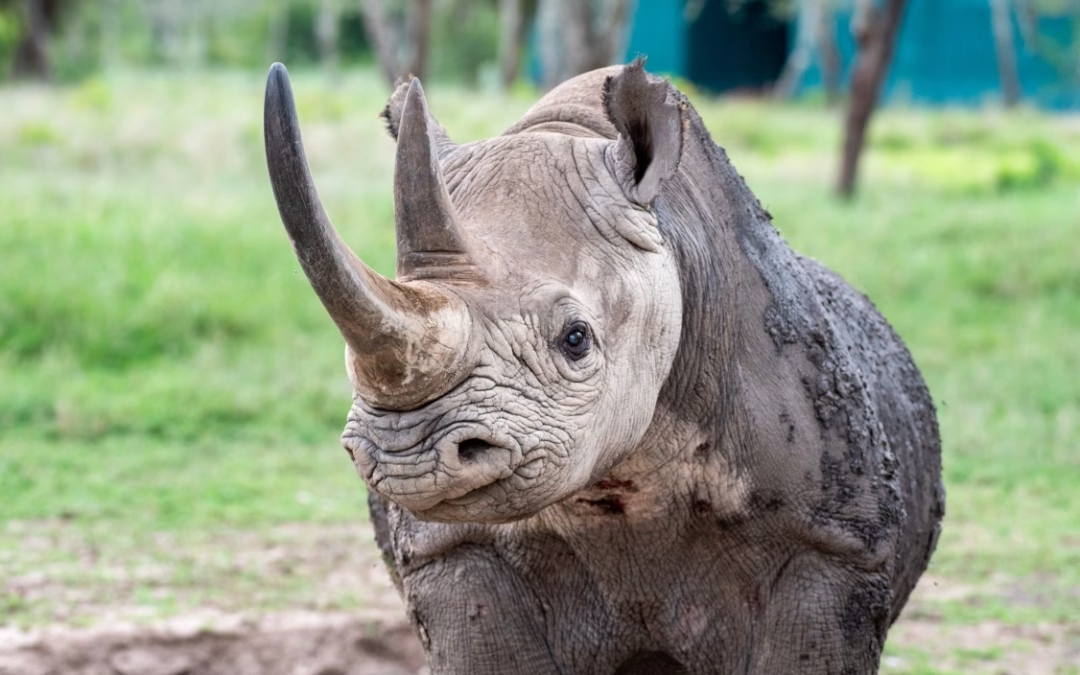
NANYUKI, Kenya — Baraka, the blind black rhino who became one of Ol Pejeta Conservancy’s most recognisable conservation ambassadors, died on the night of Saturday, August 15, aged 31.
Initial information received by Campo East Africa Safaris indicates that Baraka had been unwell and may have died of old age. However, the cause of death remains unconfirmed, pending an official statement or veterinary report from Ol Pejeta Conservancy.
The death, marks the loss of a rhino whose life told an unusual story of survival, specialised care and the close human stewardship required to protect Kenya’s most threatened wildlife.
Baraka’s life at Ol Pejeta
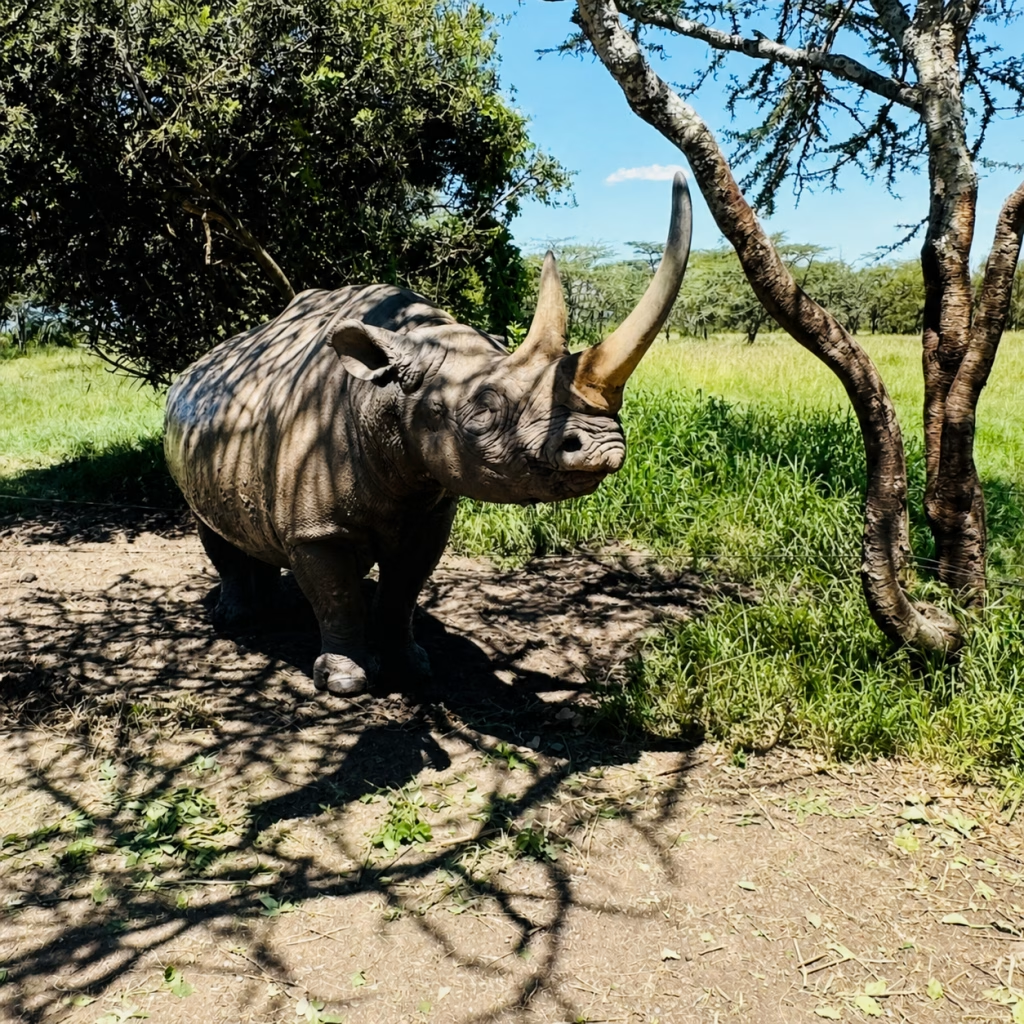
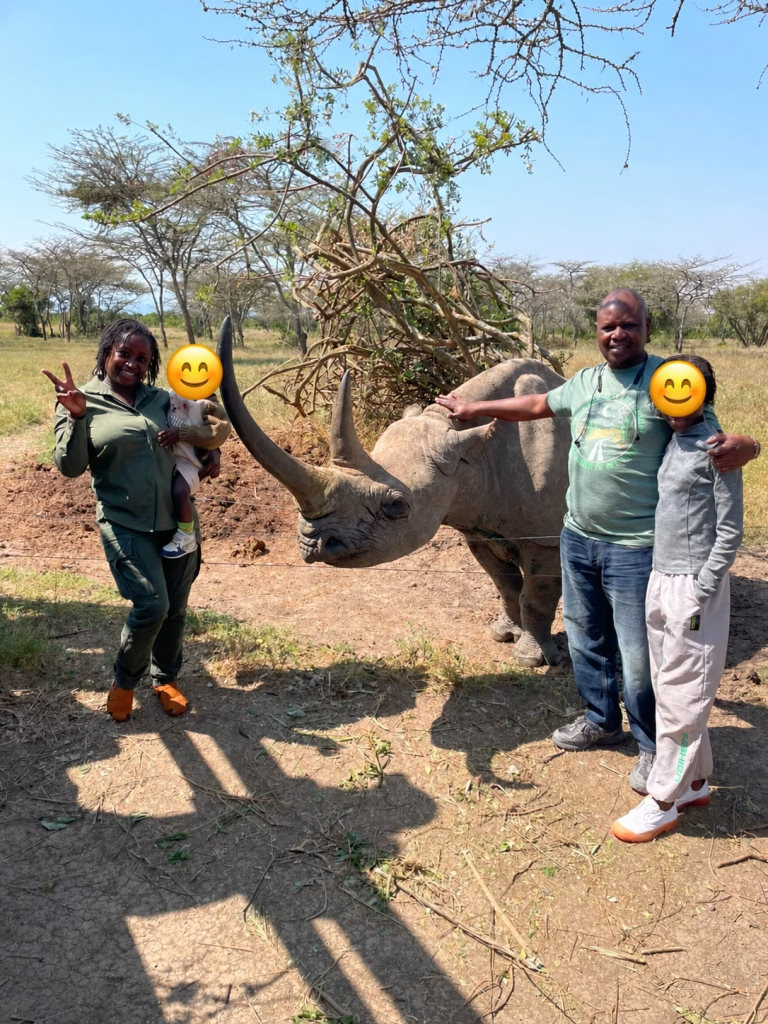
Baraka, the blind black rhino
Baraka was born at Ol Pejeta on November 20, 1994, to a female rhino named Carol. He was among the first rhinos born on the conservancy’s plains and lived for years as a territorial male in its western sector.
His life changed in 2008, when he lost his right eye during a fight with another male rhino. He later developed cataracts in his remaining eye, leaving him completely blind. Unable to safely survive without sight in the wild, Baraka was moved into Ol Pejeta’s 100-acre Endangered Species Enclosure, where he received round-the-clock care and security.
Ol Pejeta described Baraka as an important ambassador for black-rhino conservation, known for helping visitors understand the vulnerability and resilience of the species. His enclosure placement gave him security while allowing conservancy teams to monitor his health closely. Ol Pejeta Conservancy’s Baraka profile records his rescue in 2008 and his move into managed care after blindness made independent survival impossible.
At the time of writing, Ol Pejeta’s public Baraka profile still lists him as 30 years old, although his November 1994 birth date means he was 31 at the time of his reported death.
Cause of death awaits confirmation
Campo East Africa Safaris understands that Baraka had been ailing in the period before his reported death. Early information suggests old age may have been a factor, but this has not been confirmed by Ol Pejeta Conservancy or wildlife authorities.
No official post-mortem findings, veterinary assessment or public announcement had been issued by Ol Pejeta at the time this article was prepared. Campo will update this report when the conservancy provides a formal statement.
A familiar figure for safari visitors
Julius and family with Baraka on 6th August 2026
Unlike the rhinos that visitors may encounter only briefly on game drives, Baraka was one of the animals many people came to know by name. His blindness and long-term care made him a visible reminder that rhino conservation is not only about population numbers, anti-poaching patrols and protected landscapes, but also about individual animals.
His story also reflected the difficult decisions that conservancies make when an animal can no longer safely live on its own. Baraka’s care at the endangered-species enclosure allowed him to remain protected after losing both eyes, while continuing to introduce visitors to the challenges black rhinos face in Kenya and across Africa.
Black rhinos remain listed as Critically Endangered on the IUCN Red List. Kenya Wildlife Service has said the country’s black-rhino recovery has made meaningful gains from the lows of the 1980s, but the species remains exposed to poaching, habitat pressure and climate-related threats such as drought.iucnredlist+1
Every individual rhino therefore carries significance beyond its own lifetime. Baraka did not represent a breeding programme alone; he represented public connection to a species whose survival still depends on secure habitat, trained wildlife teams, sustained conservation funding and vigilance against illegal wildlife trade. His reported death is a reminder that the protection of black rhinos remains a long-term responsibility—one measured not only in population statistics, but in the lives of animals such as Baraka.
Editor’s note: This is a developing report. Campo East Africa Safaris is reporting information received from a source close to Ol Pejeta Conservancy. Ol Pejeta Conservancy had not issued a public statement at publication. The reported cause of death has not been independently confirmed.
Yes, an August 2026 Masai Mara migration safari may still be possible, but the best-known camps, preferred flights, and private vehicles can be limited. Flexibility on travel dates, camp location, and road versus air access improves your options. Ask for two or three itinerary alternatives, and never book on the assumption that a Mara River crossing is guaranteed.
August is one of the most sought-after periods for a Kenya safari because it falls within the Great Migration season in the Maasai Mara. The migration is a year-round movement, but the best-known Mara River crossings typically occur during the July-to-October period, shaped by rainfall, grazing, and animal behavior rather than a fixed timetable.
That makes availability the real question. It is not simply whether a room exists. It is whether a suitable camp, vehicle, guide, flight, and route can be matched to your dates, party size, and travel priorities.
August 2026 availability: what can still be booked
Late booking does not always mean no booking. It means making decisions with more care.
In August, the components that usually become difficult first are small-camp rooms, family tents, private vehicles, and preferred bush-flight schedules. A traveler who needs one specific camp for exact dates has fewer options than one who is open to two nearby properties, a one- or two-day date shift, or a road-and-air combination.
A successful last-minute Masai Mara migration safari is built around quality alternatives, not compromise for its own sake. The goal is to preserve the core experience: good wildlife country, enough time on safari, a suitable accommodation standard and a realistic transfer plan.
Our 3-day Maasai Mara luxury tented-camp package provides a useful starting point for a short stay, but every August enquiry should be confirmed against current camp inventory, transport availability and the traveler’s specific requirements. The published package is subject to room availability and is designed around a defined group and inclusion structure, so custom pricing may be needed for smaller parties, children or different travel arrangements.
What may still be available
Depending on the exact dates, we may be able to source:
Luxury tented camps with alternative room configurations or nearby locations
Camps in private conservancies rather than a first-choice Reserve property
Scheduled bush flights at different times of day
Road safari options from Nairobi where flying schedules are restricted
Shared or private game-drive arrangements, depending on group size
A revised itinerary that adds a night, shifts the Mara stay or combines another Kenya destination
The best approach is to enquire with clear priorities. Tell us whether your non-negotiable is a private vehicle, a family suite, a fly-in itinerary, a specific camp style, a migration-focused location or a fixed budget. We can then protect what matters most while adjusting the parts of the itinerary that are more flexible.
The fastest path from enquiry to confirmation
A last-minute August booking works best when the initial enquiry is complete. A vague request such as “two people for the migration” can begin the process, but it cannot produce a dependable itinerary quickly.
Share the following details from the outset:
Exact travel dates, plus whether you can shift by one or two days
Number of travelers and room configuration
Children’s ages, if relevant
Desired accommodation level and budget range
Whether you prefer a private vehicle or are open to a shared arrangement
Whether a road safari, fly-in safari, or mixed transport plan works for you
Your must-see experiences, such as migration viewing, big cats, photography, a conservancy stay, or a hot-air balloon safari
Your international arrival and departure times in Nairobi
With this information, we can check realistic options rather than sending a generic list of camps that may no longer be available.
Confirm before you commit
Before paying a deposit, ask for the final itinerary in writing. It should show the camp names or stated accommodation standard, number of nights, meal basis, transport type, park or conservancy fees, game-drive arrangement and cancellation terms.
Read our booking and cancellation policy closely before confirming. Safari bookings often combine different suppliers, and payment, amendment and cancellation conditions can vary by component.
The right question is not, “Can you hold this forever?” It is, “What is confirmed, what is on request, how long is the quote valid, and what happens if an element cannot be secured?”
Three ways to preserve safari quality
A first-choice itinerary may be full, but a thoughtful alternative can still deliver an outstanding August safari.
1. Shift the dates, not the dream
If your travel window permits it, moving by even one or two nights can unlock a better camp, preferred room category, or more convenient flight. August demand is not identical every day. Small gaps sometimes appear through cancellations, supplier releases, or changing flight inventory.
Do not assume that a later August departure means weaker wildlife. Migration movements are not scheduled. The greater Mara ecosystem remains rich in resident wildlife throughout the year, while the migration itself responds to natural conditions.
2. Consider a conservancy or hybrid itinerary
A traveler who cannot secure a camp in a preferred Reserve location may find a more intimate, better-designed stay in a nearby conservancy. Depending on the individual conservancy and camp rules, this can also add guided walks, night drives, or a more flexible game-viewing rhythm.
A hybrid itinerary can be particularly effective for stays of four nights or more: spend part of the journey in a conservancy and part in a Reserve-focused camp. This provides a broader Mara experience without relying on one location to provide everything.
A fly-in safari can save substantial time on a short itinerary, particularly when every game-drive hour matters. But if a preferred flight schedule is unavailable, a road transfer may keep the trip possible and can make sense for travelers who enjoy seeing Kenya beyond the airport.
A mixed itinerary is another option: fly to the Mara, then drive to another destination; or begin with a road transfer and fly back to Nairobi. The best arrangement depends on your number of nights, international flight timing, luggage needs, mobility considerations, and budget.
What matters is not choosing the most expensive transport option. It is protecting enough time in the right wildlife areas.
What a Masai Mara safari quote should include
It is easy to compare safari prices incorrectly. One quote may look lower because it excludes park fees, domestic flights, a private vehicle, drinks, transfers, or accommodation upgrades.
For August 2026, we clarify every material inclusion:
Quote item
What to confirm
Accommodation
Exact camp or accommodation category, room type and number of nights
Meals and drinks
Full board, drinks policy and any special dietary arrangements
Park or conservancy fees
Whether they are included, excluded or subject to change
Transport
Road vehicle, scheduled flight, private charter, airstrip and hotel transfers
Game drives
Shared or private vehicle, number of guests and guide arrangement
Activities
Whether ballooning, walks, night drives or cultural visits are optional or included
Payments
Deposit amount, balance due date, quote expiry and cancellation terms
Our existing Mara package lists accommodation, Land Cruiser transport, park entry for residents, meals and bottled water among its stated inclusions, while noting that non-resident fees and customized pricing can differ. Treat that product page as an example rather than an automatic August 2026 availability guarantee.
Do not book a guaranteed river crossing
The Mara River crossing is extraordinary because it is unpredictable. That uncertainty is part of the natural event.
No ethical safari company should sell an August itinerary by guaranteeing that you will witness a crossing. The migration can be active while the herds are elsewhere. Animals may gather at a riverbank, turn back, cross at another point, or move after a change in rain and grazing conditions.
Book the Mara for the full safari experience:
Vast grassland landscapes
Large herds of wildebeest and zebra during migration periods
Lions, leopards, cheetahs, elephants and other resident wildlife
Expert guiding and long, unhurried game drives
A camp and itinerary that fit your own travel style
The most useful strategy is to allow enough time. Two nights can deliver a memorable introduction to the Mara, but three or four nights offer more flexibility for wildlife movements, weather and relaxed game-viewing time.
Check current August availability
An August 2026 Masai Mara migration safari can still be arranged if you act with clarity and flexibility. The strongest enquiries include exact dates, party size, rooming requirements, budget, transport preference, and the one or two things that matter most to you.
We will check live camp, vehicle, and flight availability and return suitable alternatives rather than promising inventory that has not been confirmed.
Is it too late to book the Masai Mara for this August?
Not necessarily. August is a high-demand period, so preferred camps, room categories, flights and private vehicles may be limited. Flexible dates, alternative camps and different transfer options can improve the chances of securing a strong itinerary.
Can Campo East Africa Safaris guarantee a wildebeest river crossing?
No. River crossings depend on herd movements, rainfall, grazing conditions and animal behavior. The Great Migration is a natural, year-round movement, although the July-to-October period is associated with the Mara’s major crossing season.
Are last-minute August safaris more expensive?
They can be, especially when only premium room categories, private transfers or limited-flight options remain. However, a flexible traveler may also find a good alternative through a cancellation or an itinerary that uses different dates, camps, or transport. The final value depends on what is included, not the headline rate alone.
What do you need for a same-day safari quote?
Provide your dates, number of guests, rooming requirements, budget range, preferred accommodation level, transport preference, and any non-negotiables, such as a private vehicle, a family room, a fly-in itinerary, or a conservancy stay.





Recent Comments