
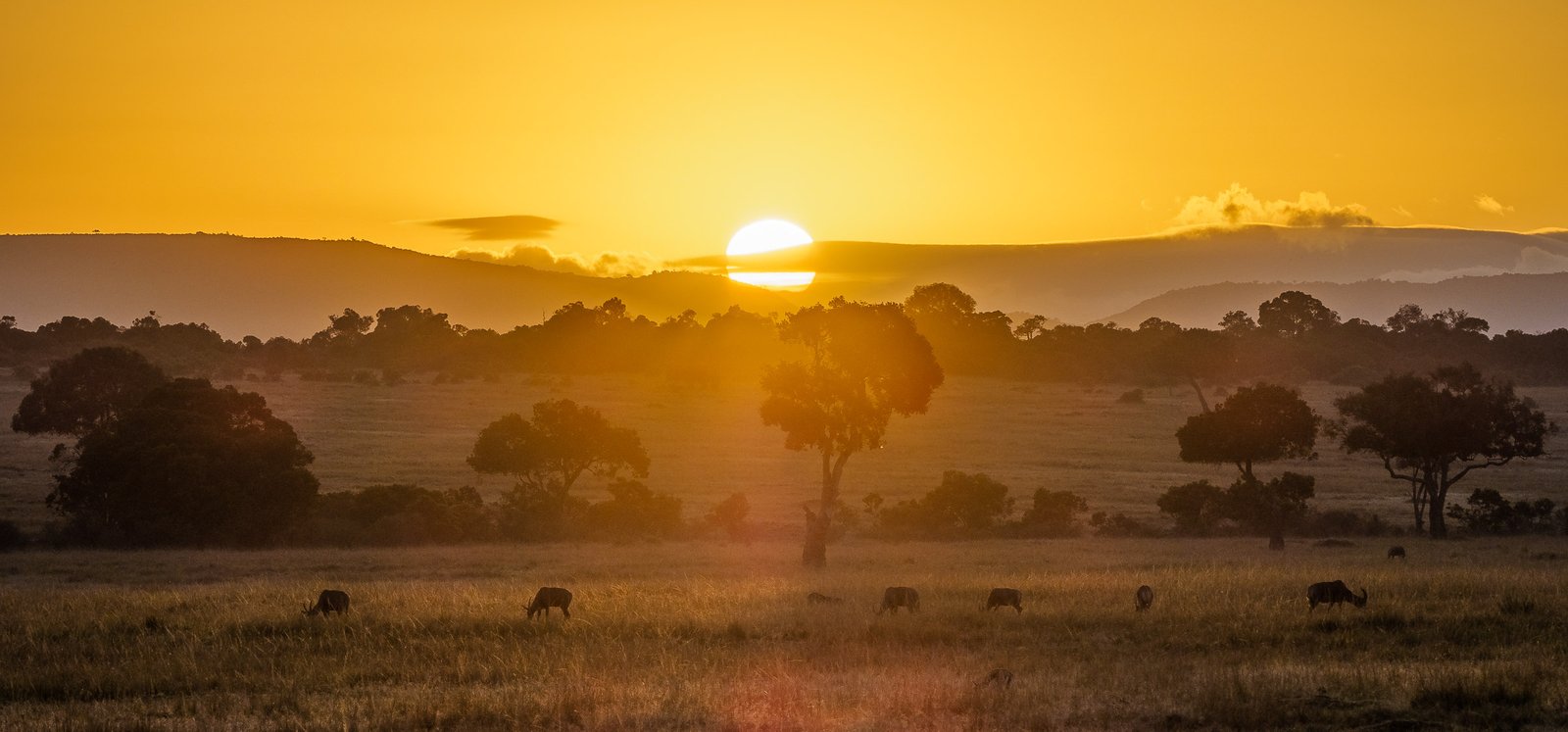
September can be better than August for travelers who want strong migration-season wildlife with potentially less family-holiday pressure, but it is not automatically better for Mara River crossings. Herd location changes with rainfall, grazing and animal behavior. Choose August for its peak-season energy; choose September for a potentially calmer, still wildlife-rich safari with more flexibility around camps and itineraries.
The Masai Mara migration is one of Africa’s defining wildlife events, but choosing the right month involves more than following a calendar. Both August and September sit within the most sought-after portion of the Mara season. Both can bring enormous wildebeest and zebra herds, exceptional predator viewing, and the possibility of Mara River crossings.
Neither month, however, comes with a wildlife guarantee.
The Great Migration is a year-round movement between Tanzania’s Serengeti and Kenya’s Maasai Mara ecosystems. Its most iconic Mara River phase is generally associated with July through October, but the timing and location of crossings change in response to rainfall, grass, water availability, and the herds themselves. That is why we plan every migration safari around the broader Mara experience—not a promised river crossing at a particular place or time.
For many travelers, the real comparison is this: do you prefer August’s classic peak-season atmosphere, or September’s potential for a more measured, flexible, and still deeply rewarding safari?
August vs September in one comparison table
| Factor | August Masai Mara safari | September Masai Mara safari |
|---|---|---|
| Migration season | Strong migration-season potential, with major herds often present in the wider Mara ecosystem | Strong late-migration potential, with herds still moving through the Mara ecosystem |
| Mara River crossings | Possible, but never guaranteed | Possible, but never guaranteed |
| Visitor atmosphere | Traditionally one of the busiest safari periods, particularly around school-holiday travel | Can feel less pressured once some holiday travel eases, although prime camps and sightings remain busy |
| Camp availability | Preferred camps, family units and private vehicles often require early booking | Availability may improve for some dates, but sought-after camps can still be limited |
| Pricing | Peak-season accommodation and Reserve fees commonly apply | Peak-season accommodation and Reserve fees commonly apply |
| Weather pattern | Usually dry-season conditions, though local weather varies | Often dry overall, with the possibility of localized showers and changing conditions |
| Photography | Dry grass, golden light and busy wildlife scenes can be rewarding | Similar wildlife potential, sometimes with greener tones or more changeable skies |
| Best for | Travelers tied to school holidays or seeking classic peak-migration atmosphere | Flexible couples, photographers and guests looking for migration wildlife with potentially more itinerary choice |
Both months sit within the Mara’s high-demand season. For 2026, visitors should also factor in the seasonal park-fee structure: published guidance indicates that non-resident adult entry to the Masai Mara is USD 200 per day from July through December, compared with USD 100 from January through June. We will always confirm current fees, accommodation terms and inclusions before you book.
What migration timing can—and cannot—promise
A Masai Mara migration safari is best understood as an unfolding natural event rather than a performance with fixed dates.
Wildebeest, zebra and other grazing animals move in response to conditions across an enormous ecosystem. A herd may gather near a river, turn away, cross at a different point, or remain in a particular area longer than expected. Heavy rain in one location, fresh grazing in another or a change in river conditions can influence movement quickly.
That means an August itinerary cannot promise a crossing any more than a September itinerary can.
What August can offer?
August is widely associated with the classic image of the Mara migration: long columns of wildebeest, heavy concentrations of zebra, predators following the herds and intense interest around the river. It is a compelling time to travel, especially for first-time safari guests who want to visit during the period most closely linked with the migration.
It can also feel energetic. The Mara is an expansive landscape, but celebrated sightings and well-known crossing points can draw multiple vehicles. A skilled guide makes a difference here—not by guaranteeing solitude or a crossing, but by reading animal movement, using local knowledge and helping guests make the most of a full day in the bush.
What September can offer?
September often retains the essential appeal of the migration season while giving flexible travelers another strong window for a Mara safari. The wider ecosystem can still hold major herds, and predator viewing remains a central part of the experience.
For guests who are not restricted to August school-holiday dates, September may create more room to choose a preferred camp category, add an extra night, arrange a private vehicle or build a more considered Reserve-and-conservancy itinerary. That is not a promise of lower rates or empty wilderness; September remains high season. It is simply a useful month for travelers who value flexibility alongside wildlife.
Kenya Meteorological Department climate reporting describes September as generally dry across much of the country, while noting that localized showers can occur in western Kenya, the Rift Valley and the Lake Victoria Basin. Conditions in and around the Mara can therefore vary, and we recommend packing for warm days, cool early mornings and the possibility of rain.
Is September quieter than August?
Often, but not always.
August can carry greater demand from international school holidays and travelers planning specifically around the classic peak-migration period. By September, some of that family-holiday pressure may begin to ease. This can make a difference to the availability of rooms, flights and exclusive-use vehicles on particular dates.
But “quieter” needs context.
The Masai Mara is still one of East Africa’s most popular safari destinations in September. Top camps can be full, excellent guides can be committed well in advance, and dramatic wildlife sightings can attract other vehicles wherever you stay. A private conservancy can provide a different rhythm from the National Reserve, but it does not mean you will be alone at every exceptional sighting.
The more useful question is: what type of privacy matters to you?
- If you want broad access to classic Mara landscapes and are comfortable with a busier peak-season atmosphere, a Reserve-focused stay may suit you.
- If you value smaller camps, more flexible activities and lower-density game viewing where conservancy rules allow it, a private conservancy may be more compelling.
- If you have four nights or more, a split stay can combine the scale of the Reserve with the more intimate pace of a conservancy.
Read our guide to Masai Mara National Reserve versus a private conservancy to compare the two accommodation and access styles in more detail.
Which month fits your travel style?
The better month is the one that aligns with your dates, priorities, and tolerance for uncertainty. We do not recommend selecting a safari month solely because someone has promised a crossing.
Families and multigenerational groups
August can be the practical choice for families whose travel dates are determined by school calendars. The key is to book early enough to secure the right room configuration, suitable camp environment and vehicle arrangement.
A private vehicle can be especially valuable for families. It allows you to set a more comfortable rhythm, return to camp when needed and spend longer at a sighting when the group is engaged. If August availability is limited, September can offer a useful alternative for families with more flexibility.
Our guide to private versus small-group Kenya safaris explains how vehicle exclusivity, group size and pacing affect the value of the trip.
Photographers
Both months can be excellent for photographers. August often brings drier landscapes, active migration scenes and the visual drama of dense herds. September can add potentially more changeable skies, shifting grasses and similar opportunities for predators, birds and herd movement.
The best photography choice is often less about the month and more about the itinerary. We recommend allowing at least three full nights in the Mara, securing a vehicle format that gives each guest a window seat and choosing a camp location that reduces unnecessary daily transit.
A private vehicle may be worth the premium if photography is a core purpose of the safari. It gives your party greater control over departure time, position at sightings and how long to wait for animal behavior or better light.
First-time safari travelers
For a first safari, August can be emotionally satisfying because it matches the traditional idea of the Mara at migration time. If your dream is to experience the destination during its most famous season and your dates are fixed, August is a sound choice.
September is equally suitable for first-timers who want migration-season wildlife but would prefer to explore a more flexible range of camps, routes or flight options. In either month, we encourage guests to focus on the complete Mara: lions, leopards, cheetahs, elephants, birds, open plains and the movement of the herds—not only the river.
Couples with flexible dates
For couples, including honeymooners and anniversary travelers, September can be particularly attractive. A slight shift in dates may make it easier to select a smaller camp, add a conservancy experience, fly into the Mara rather than drive, or linger for an additional night.
A longer stay also reduces the pressure to see everything immediately. Wildlife sightings unfold at their own pace. Four nights in the Mara can offer a far more relaxed experience than trying to compress migration hopes into two nights.
Reserve, conservancy or hybrid stay?
Your month choice should influence the itinerary, but it should not replace it.
The Maasai Mara National Reserve offers access to the classic, expansive Mara landscape and is a natural priority for guests focused on extensive daytime game drives. The surrounding conservancies offer a different style of stay, often centered on smaller camps and, depending on the specific conservancy’s rules, activities such as guided walks and night drives.
Reserve-focused stay
A Reserve-focused itinerary is often best if your priority is spending as much daylight time as possible in classic migration country. It can work especially well for a first-time visitor or for guests with only two or three nights available.
For a short introduction, explore our 3-day Maasai Mara luxury tented-camp safari. We will confirm the most suitable camp, current transport options and the exact inclusions for your dates.
Conservancy-focused stay
A conservancy-focused safari can suit travelers who value a smaller camp atmosphere, more personal service and a less hurried game-viewing rhythm. It may be especially appealing in September for couples, photographers and guests who have sufficient time to experience the Mara beyond standard daytime game drives.
Conservancy access and activity rules vary, so we explain precisely what each itinerary includes rather than making broad promises.
Hybrid itinerary
A split stay becomes particularly rewarding from four nights onward. For example, two nights in a Reserve-focused location and two nights in a conservancy can balance classic Mara access with a quieter camp experience.
The transfer must be worthwhile, however. We will not recommend a hybrid plan if it turns too much of a short safari into packing and driving. The purpose is to add depth, not complexity.
Are September safari prices lower?
Not necessarily.
September remains within the high-demand July-to-October migration period. A camp’s pricing is shaped by its location, room category, inclusions, guest capacity, conservancy fees, and availability—not simply by whether it is August or September.
A September safari can offer better value without being cheaper. For example, a traveler might be able to secure:
- A preferred tent or suite that was unavailable in August
- A private vehicle at a more suitable time
- An additional night within the same overall budget
- A fly-in itinerary that protects more time for game drives
- A conservancy-and-Reserve combination that better matches their travel style
This is why we compare complete itineraries rather than one nightly rate. We itemize accommodation, meals, park or conservancy fees, vehicle arrangement, domestic flights, airstrip transfers and optional activities so you can see what you are actually receiving.
If road and air options are part of the decision, our road safari versus fly-in safari to the Masai Mara guide can help you decide where it makes sense to invest your time and budget.
How to choose between August and September
Choose August if:
- Your dates are fixed around school holidays.
- You want the classic peak-season Mara atmosphere.
- You are comfortable booking far ahead for preferred camps and vehicles.
- You understand that even at peak migration time, river crossings remain unpredictable.
Choose September if:
- Your dates are more flexible.
- You want migration-season wildlife with potentially less holiday-driven pressure.
- You may prefer a smaller camp, conservancy extension, or a more customized itinerary.
- You value the possibility of better availability more than the certainty of traveling in August.
Choose either month if:
- You want a complete wildlife safari rather than a single guaranteed spectacle.
- You can stay for at least three nights in the Mara.
- You are prepared to select the camp, vehicle, and transfer format as carefully as the travel month.
- You want an itinerary designed around current conditions and your personal priorities.
Compare August and September itineraries
The best migration safari is not defined by a particular crossing photograph. It is defined by time in the right wildlife areas, thoughtful guiding, a camp that suits your travel style, and enough flexibility to enjoy what the Mara offers on the day.
Tell us your preferred dates, number of travelers, desired camp style, budget range, and whether your priority is migration activity, photography, privacy, family travel, or a fly-in safari. We will compare realistic August and September options and recommend the itinerary that offers the strongest overall value.
Contact our safari specialists for a tailored Masai Mara safari quote, or message us on WhatsApp to discuss current availability.
FAQs
Are wildebeest still in the Masai Mara in September?
They can be. September falls within the broader July-to-October period commonly associated with the Great Migration in the Maasai Mara. However, the exact position of herds changes with rainfall, grazing and animal behavior, so no operator can guarantee their location on a particular date.
Is September quieter than August in the Masai Mara?
It can be, particularly after some school-holiday demand eases. However, September remains part of the popular migration season, and leading camps, flights and major wildlife sightings can still be busy. We recommend choosing your camp and vehicle arrangement based on the type of privacy you value.
Are September safari prices lower than August prices?
Not automatically. Both months sit in the migration-season period, and rates depend on camp category, availability, room type, transport, fees, and inclusions. September may offer better itinerary flexibility or access to a preferred camp, which can improve value even if the nightly price is similar.
Which month is better for photographers?
Both can be excellent. August can offer classic dry-season migration scenes and golden grasslands, while September may bring similarly strong wildlife viewing with potentially more varied skies and vegetation. For photographers, the most important choices are usually a private vehicle, a knowledgeable guide, a suitable camp location, and enough nights in the Mara.