NANYUKI, Kenya — Baraka, the blind black rhino who became one of Ol Pejeta Conservancy’s most recognisable conservation ambassadors, died on the night of Saturday, August 15, aged 31.
Initial information received by Campo East Africa Safaris indicates that Baraka had been unwell and may have died of old age. However, the cause of death remains unconfirmed, pending an official statement or veterinary report from Ol Pejeta Conservancy.
The death, marks the loss of a rhino whose life told an unusual story of survival, specialised care and the close human stewardship required to protect Kenya’s most threatened wildlife.
Baraka’s life at Ol Pejeta
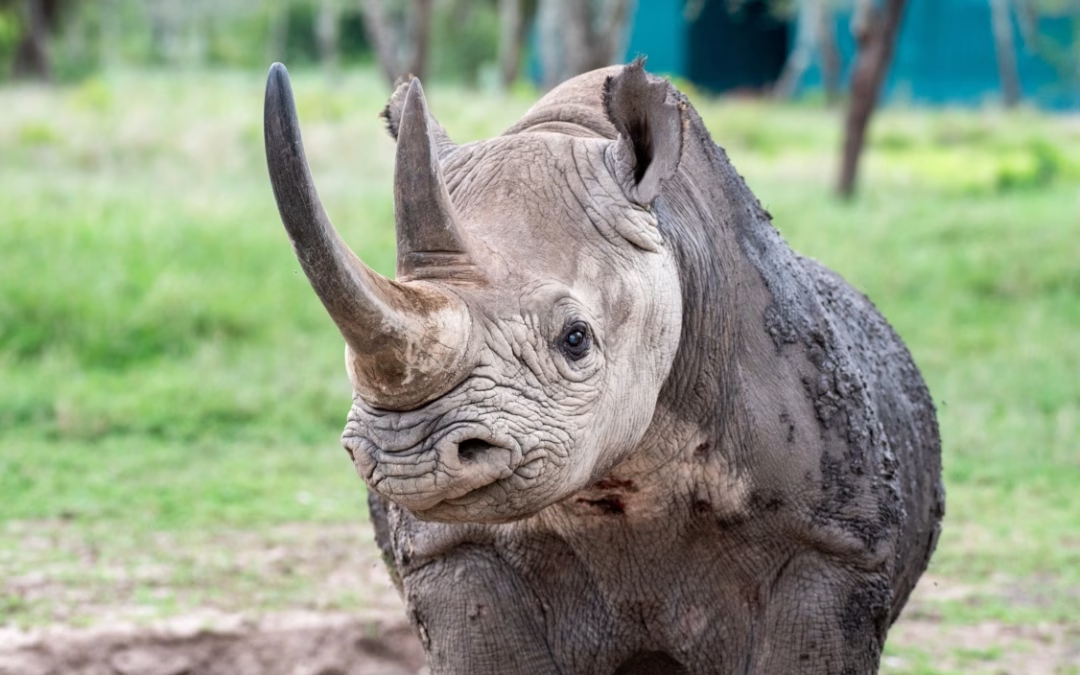
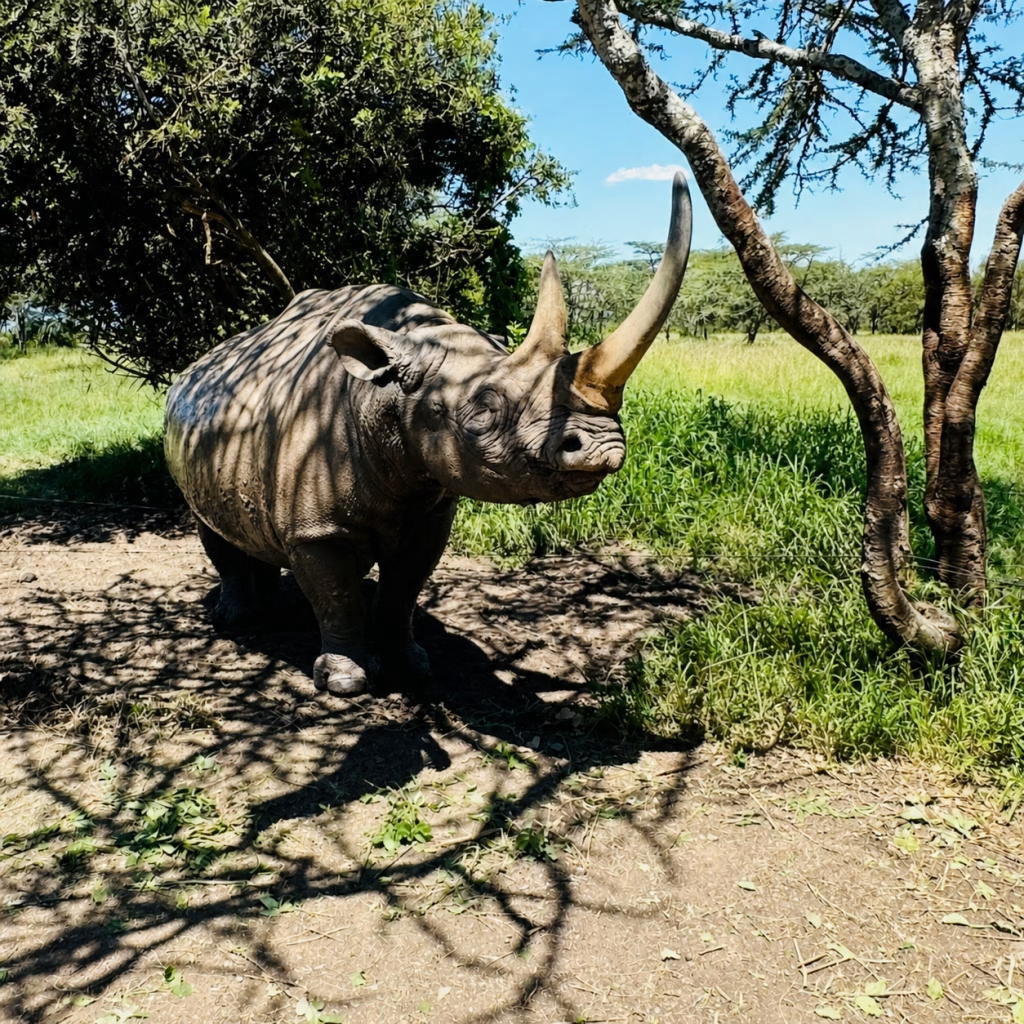
Baraka, the blind black rhino
Baraka was born at Ol Pejeta on November 20, 1994, to a female rhino named Carol. He was among the first rhinos born on the conservancy’s plains and lived for years as a territorial male in its western sector.
His life changed in 2008, when he lost his right eye during a fight with another male rhino. He later developed cataracts in his remaining eye, leaving him completely blind. Unable to safely survive without sight in the wild, Baraka was moved into Ol Pejeta’s 100-acre Endangered Species Enclosure, where he received round-the-clock care and security.
Ol Pejeta described Baraka as an important ambassador for black-rhino conservation, known for helping visitors understand the vulnerability and resilience of the species. His enclosure placement gave him security while allowing conservancy teams to monitor his health closely. Ol Pejeta Conservancy’s Baraka profile records his rescue in 2008 and his move into managed care after blindness made independent survival impossible.
At the time of writing, Ol Pejeta’s public Baraka profile still lists him as 30 years old, although his November 1994 birth date means he was 31 at the time of his reported death.
Cause of death awaits confirmation
Campo East Africa Safaris understands that Baraka had been ailing in the period before his reported death. Early information suggests old age may have been a factor, but this has not been confirmed by Ol Pejeta Conservancy or wildlife authorities.
No official post-mortem findings, veterinary assessment or public announcement had been issued by Ol Pejeta at the time this article was prepared. Campo will update this report when the conservancy provides a formal statement.
A familiar figure for safari visitors
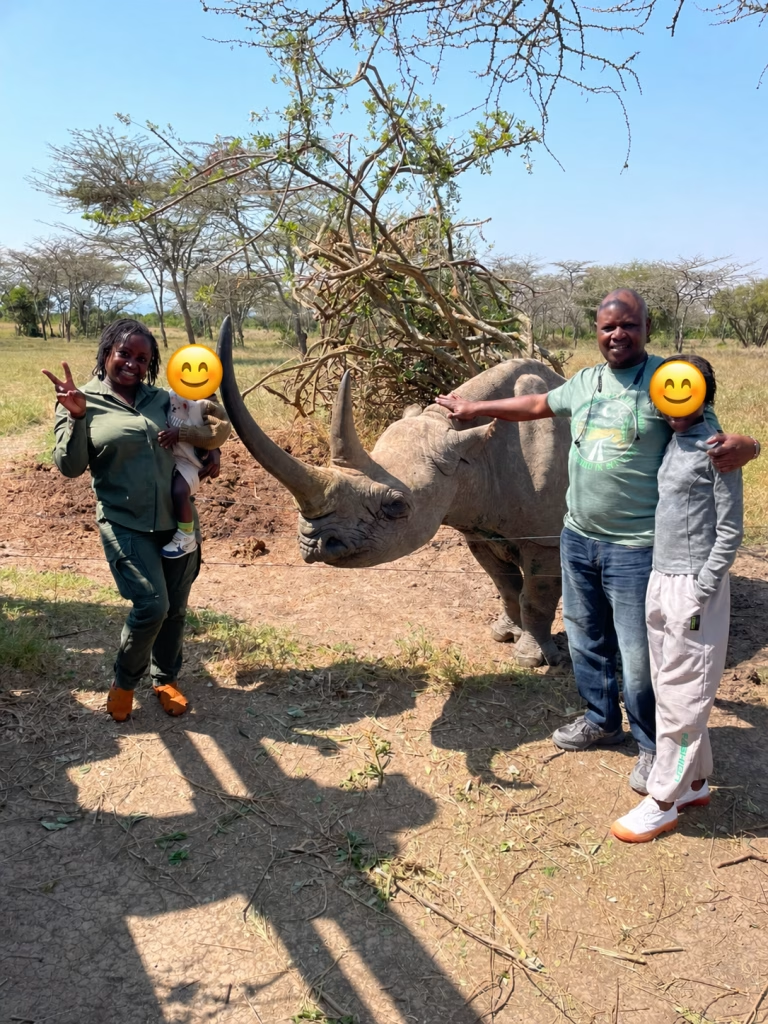
Julius and family with Baraka on 6th August 2026
Unlike the rhinos that visitors may encounter only briefly on game drives, Baraka was one of the animals many people came to know by name. His blindness and long-term care made him a visible reminder that rhino conservation is not only about population numbers, anti-poaching patrols and protected landscapes, but also about individual animals.
His story also reflected the difficult decisions that conservancies make when an animal can no longer safely live on its own. Baraka’s care at the endangered-species enclosure allowed him to remain protected after losing both eyes, while continuing to introduce visitors to the challenges black rhinos face in Kenya and across Africa.
Black rhinos remain listed as Critically Endangered on the IUCN Red List. Kenya Wildlife Service has said the country’s black-rhino recovery has made meaningful gains from the lows of the 1980s, but the species remains exposed to poaching, habitat pressure and climate-related threats such as drought.iucnredlist+1
Every individual rhino therefore carries significance beyond its own lifetime. Baraka did not represent a breeding programme alone; he represented public connection to a species whose survival still depends on secure habitat, trained wildlife teams, sustained conservation funding and vigilance against illegal wildlife trade. His reported death is a reminder that the protection of black rhinos remains a long-term responsibility—one measured not only in population statistics, but in the lives of animals such as Baraka.
Editor’s note: This is a developing report. Campo East Africa Safaris is reporting information received from a source close to Ol Pejeta Conservancy. Ol Pejeta Conservancy had not issued a public statement at publication. The reported cause of death has not been independently confirmed.
Is it safe to travel to Kenya right now? Yes — and the data backs it up. Despite alarming headlines and viral social media claims, Kenya has recorded zero confirmed Ebola cases throughout 2026, according to the Kenya Medical Association, even as a serious outbreak burns through parts of the Democratic Republic of Congo. Yet a wave of confusion, much of it tied to a controversial American quarantine facility in Laikipia, has left travellers second-guessing safari plans that were, in reality, never at risk.
This is the story of how a regional health emergency a thousand miles away, combined with a geopolitically fraught US military project, produced a tourism panic almost entirely disconnected from the actual epidemiology. It's worth untangling, because the facts are reassuring, well-documented, and worth trusting over rumour.
Is There Ebola in Kenya Right Now?
No. As of the latest Ministry of Health update, Kenya has not recorded a single confirmed case of Ebola Virus Disease, despite screening more than 140,000 travellers arriving from affected regions and investigating over 100 suspected alerts — all of which tested negative. This isn't just a Kenyan government talking point: the US Centers for Disease Control and Prevention (CDC) — widely regarded as the world's most trusted authority on travel health risk — has issued Travel Health Notices specifically for the Democratic Republic of Congo (Level 3, "Reconsider Nonessential Travel") and Uganda (Level 2), but has issued no such notice, warning, or advisory for Kenya at any point during this outbreak.
The World Health Organisation's Public Health Emergency of International Concern declaration is similarly scoped to the DRC and Uganda, with Kenya's zero-case status independently corroborated in the WHO Africa regional office's own weekly situation reports. Health Cabinet Secretary Aden Duale has repeated the zero-case reassurance publicly and consistently since May 2026, confirming this status in official statements verified through the Ministry of Health's own press office.
The Kenya Tourism Federation, the apex body representing the country's tour operators, hoteliers and travel agents, echoed the same message in a formal advisory to international partners, stating plainly that "Kenya remains free of any Ebola cases" — a claim that, notably, no independent international health authority has contradicted.
Kenya Ebola Outbreak 2026: Separating Geography From Fear
The actual outbreak is centred nearly a thousand miles from Kenya's safari circuits, in the Ituri, North Kivu, and South Kivu provinces of the Democratic Republic of Congo, driven by the rarer Bundibugyo strain of the virus. The World Health Organisation has classified this as a serious regional public health emergency, and a smaller, related cluster briefly emerged in Uganda before being brought under control. To put the distance in perspective for someone unfamiliar with African geography: the gap between Nairobi's safari circuits and the DRC outbreak zone is comparable to the distance separating London and Rome. A localised outbreak in a neighbouring country's remote province does not put a Maasai Mara game drive at risk, any more than an outbreak in Eastern Europe would threaten a holiday in Paris.
Why Is There a US Ebola Facility in Kenya? The Laikipia Controversy Explained
Here's where most of the confusion actually originates — and it has almost nothing to do with an outbreak inside Kenya. In late May 2026, the US government, under an agreement with President William Ruto's administration, announced plans to build a 50-bed quarantine facility at Laikipia Air Base near Nanyuki, intended specifically to isolate American citizens — aid workers, military personnel, or diplomats — who may have been exposed to Ebola while working in DRC. The facility was never designed to treat Kenyan patients or respond to a domestic Kenyan outbreak; it exists because the Trump administration would not permit potentially exposed US citizens to fly directly home.
Kenya's High Court issued a stop-work order within days of the announcement, and when construction continued regardless, Health CS Duale was later held in contempt of court. Protests in Nanyuki turned deadly, with three people killed in clashes with police over the course of several demonstrations in June 2026, dramatically escalating public anxiety about the project — anxiety about sovereignty and colonial-era grievances tied to the land, not about an actual local infection.
As Kenya's Ministry of Health itself has stated, the facility is a precaution, not a symptom: "these facilities do not mean Kenya has an Ebola case," Duale said, comparing it to buying fire trucks before a fire starts.
Is Kenya on the CDC or WHO Ebola Travel Warning List?
No. The World Health Organisation's emergency declaration applies to the outbreak zone in DRC, not to Kenya, and no international body has issued a travel advisory against visiting Kenya on Ebola grounds. What travellers will encounter are precautionary layers: the Kenya Civil Aviation Authority has mandated enhanced screening protocols at entry points, including thermal scanning and health declaration forms at Jomo Kenyatta International Airport and major land borders.
Is It Safe to Go on Safari in Kenya? What About the Maasai Mara?
Absolutely. The Maasai Mara, Amboseli, and Kenya's coastal resorts sit nowhere near any affected region, and normal safari activity — game drives, lodge stays, guided walks — carries no elevated Ebola risk. If you're planning to explore [Kenya's Maasai Mara], the itinerary and experience remain exactly as they were before this outbreak began.saunterlandtours+1
How Ebola Actually Spreads (And Why Tourists Aren't at Risk)
Much of the fear stems from a basic misunderstanding of transmission. Ebola spreads only through direct contact with the bodily fluids of a person who is already symptomatic — not through the air, casual contact, food, or wildlife viewing from a safari vehicle. The Kenya Tourism Federation has been explicit on this point: despite multiple Ebola outbreaks across Africa over several decades, there is no confirmed or well-documented case of a tourist contracting Ebola while undertaking normal tourism activities such as safaris, sightseeing, or hotel stays.
Kenya's Entry Requirements and Screening Measures in 2026
Travellers should expect standard precautionary steps rather than restrictions: temperature screening on arrival, a health declaration form, and possible follow-up questions if you've recently transited through DRC or Uganda. These measures exist at 23 designated centres nationwide as part of Kenya's broader disease-preparedness framework, a system Kenya has maintained for years independent of this specific outbreak.
Where the Misinformation Is Coming From
Much of the panic has been amplified by fabricated claims circulating on WhatsApp and social media — including fake images purporting to show Ebola treatment centres and false reports of confirmed cases in specific counties, several of which have been formally debunked by health officials and regional fact-checking networks. Tourism stakeholders have been outspoken that it's the misinformation, not the actual health situation, doing the damage to bookings.
Should You Cancel Your Kenya Safari?
No — and Kenya's tourism authorities are saying so directly. The Kenya Tourism Federation has explicitly urged "intending visitors and travel partners to proceed with their travel plans," while Tourism Principal Secretary Julius Bitok has publicly stated the country is "safe, and ready to welcome you". If you're weighing safari package options or comparing Maasai Mara costs, there is no health-related reason to delay.
Kenya's Ebola-Free Status, Confirmed
As of August 2026, Kenya's Ebola preparedness infrastructure — enhanced surveillance, expanded lab capacity, and trained response teams — reflects proactive investment, not evidence of risk. Uganda's related outbreak has since been declared resolved, and while Kenya maintains heightened vigilance at border points given the continuing situation in DRC, its own case count remains, and has remained throughout, exactly zero.
If you're planning your first trip and want further reassurance, contact us via phone call or WhatsApp to speak to one of our representatives regarding safari preparation, logistics, timing, and what to expect on the ground.
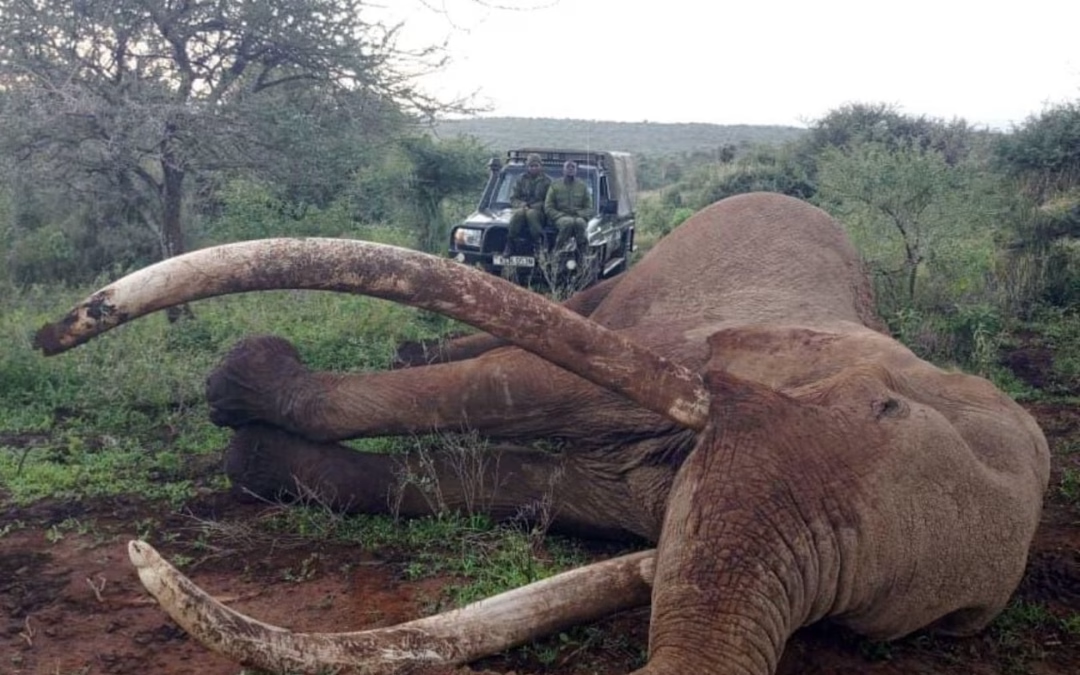
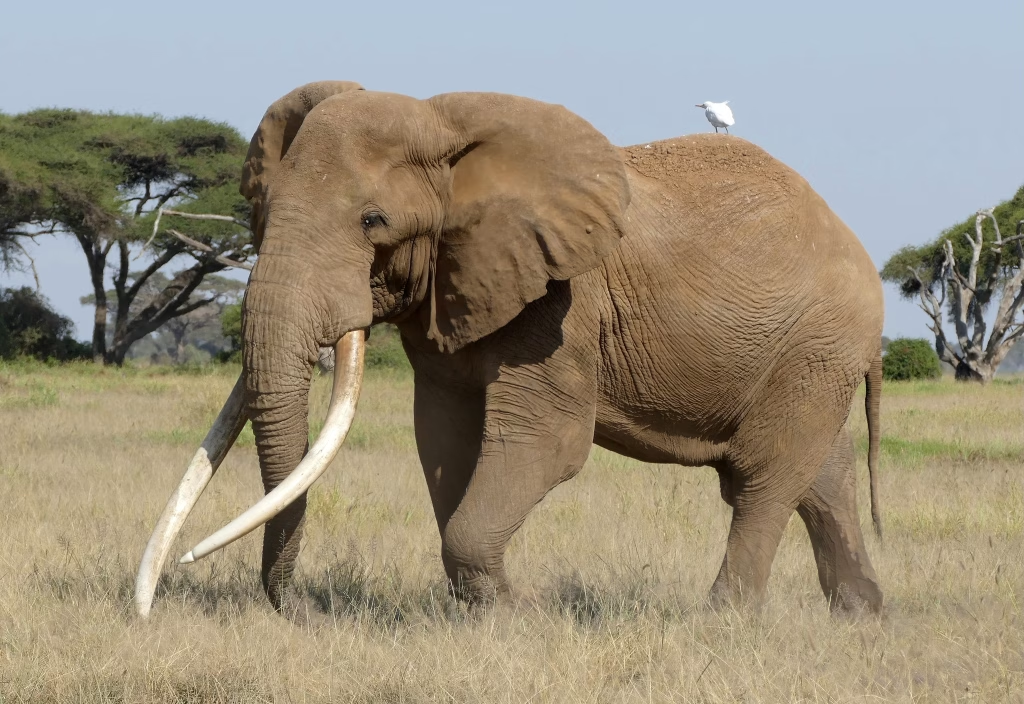
Craig, the Amboseli elephant and the celebrated super tusker, died early Saturday, Jan. 3, 2026, officials said. Kenya Wildlife Service confirmed the death in Amboseli National Park after rangers found him motionless. Craig was 54, and among Africa’s last bulls with ground-sweeping tusks. Conservation groups said he likely died of natural causes, after months of age-related digestive trouble.
His passing closes a long chapter for Amboseli, where the Craig drew tourists and pride from local families. Amboseli Trust for Elephants traced his birth to January 1972, to Cassandra of the CB family.
Craig Death Confirmed
The Kenya Wildlife Service said Craig died within the Amboseli ecosystem, near community land that borders the park.
Big Life Foundation said he had shown serious digestive issues, and age makes recovery hard for bulls. Officials did not report signs of poaching, and his tusks remained intact.
Early this morning, Amboseli National Park, Kenya - and indeed the world - lost a true icon. Craig, the legendary super tusker famed for its immense,… pic.twitter.com/4Xnl5uwNPv
In Kenya, poachers have long targeted big tuskers, so his peaceful end felt like a rare relief.
A life shaped by the CB family
Craig belonged to the well-studied CB family, a lineage followed for decades by researchers. He was born to Cassandra, a matriarch known for leading her relatives through drought and danger. Some researchers suspected he had a twin sister, Cerise, who later became the CB matriarch. That link is not confirmed, but the idea stayed because Craig and Cerise were close in age. He matured into a calm bull, and guides often described him as patient around vehicles.
Why Craig Mattered
Craig was a “super tusker,” a bull with tusks that can weigh over 45 kilograms. Such elephants are rare now, because big tusks bring danger from poachers and trophy hunters.
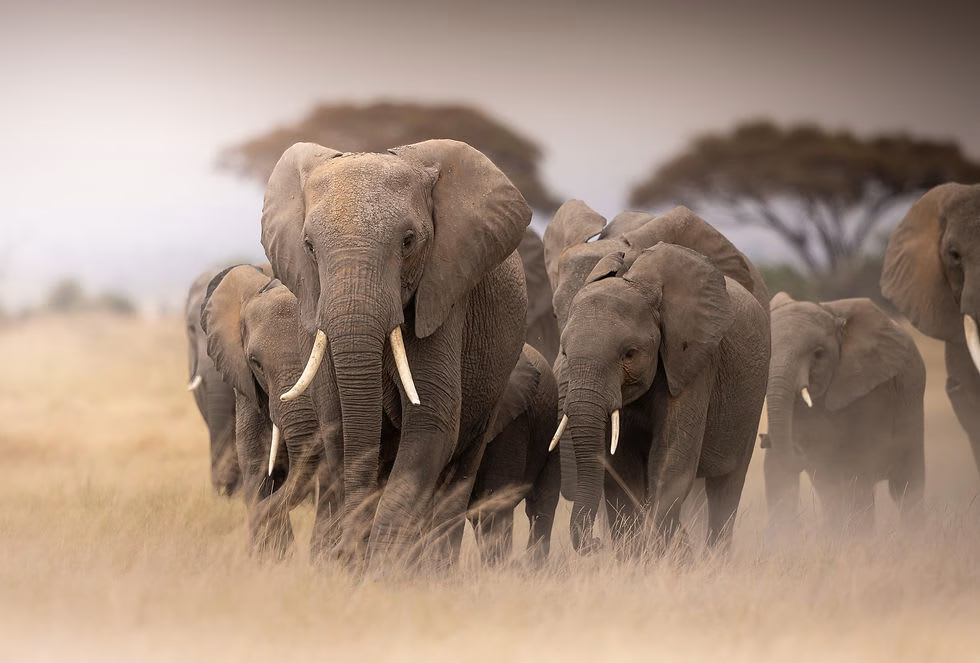
Craig in his element
In 2021, East African Breweries even adopted Craig as a symbol for Tusker beer, reports said. To many Kenyans, he stood for a conservation story that worked, with rangers and communities holding the line. The Associated Press noted Kenya’s elephant numbers have risen in recent years, a trend Craig helped embody.
Much of the Craig's range overlapped farms and grazing land, so protection depended on trust. Conservationists said community scouts and park rangers tracked him often, and they responded fast to threats. Big Life Foundation said false death rumors last November were wrong, but they showed how watched he was.
Now, those protectors are also mourners, remembering the Craig Amboseli elephant as gentle, but never weak.
His death also recalls that of Tolstoy, another Amboseli bull whose natural death in 2022 that we reported on, prompted fresh calls for vigilance.
Craig likely sired many calves, and his genes will remain in Amboseli herds for years. Still, super tuskers are not replaced easily, because few bulls live long enough to grow tusks like that. Officials said they will continue monitoring other big bulls, and they urged visitors to respect viewing rules.
Visit Amboseli with Campo East Africa Safaris
If you want to see Amboseli’s elephants and learn their stories, travel with guides who know this place well. Campo East Africa Safaris can arrange a smooth trip, including our Visit Amboseli 3 Days safari. Explore the package, and let our professional team handle permits, timing, and safe viewing.
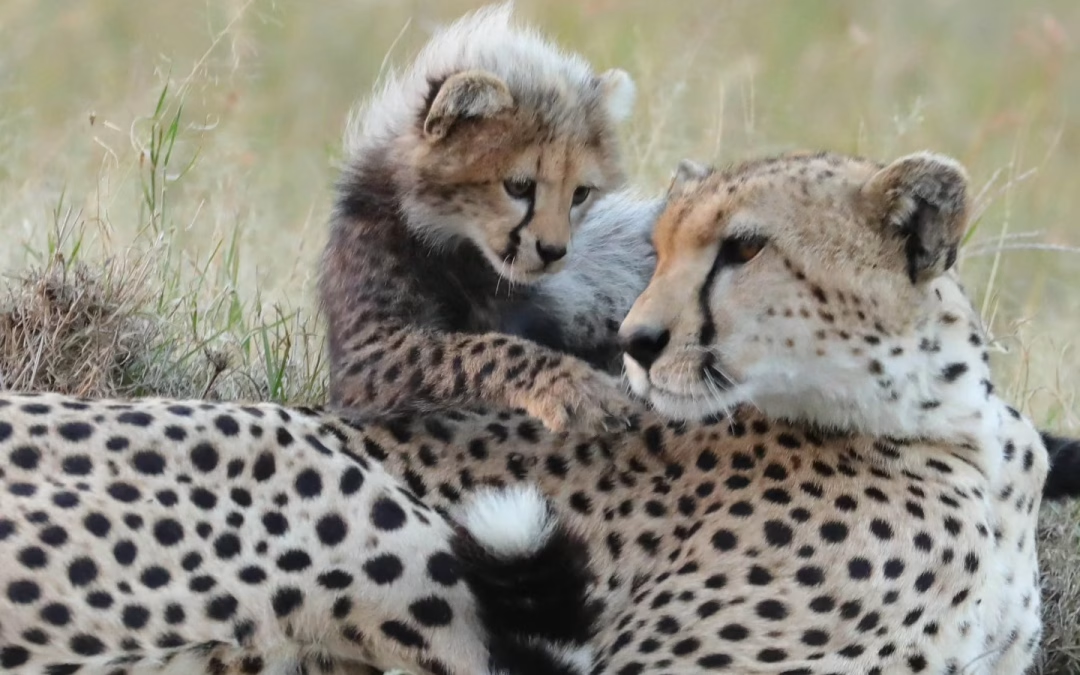
MAASAI MARA, Kenya — The Maasai Mara has lost one of its most iconic big cats. Nora the Queen, believed to be the oldest female cheetah in the Mara ecosystem at 13.5 years, was tragically killed in a rare and brutal encounter with a leopard known locally as Bella 2. The fatal attack occurred as she was crossing a dry riverbed, shocking guides and researchers who had never expected such a seasoned and resilient cheetah to fall in this way.
Nora’s passing comes amid a cheetah population of approximately 72 individuals in the Maasai Mara and surrounding conservancies — a number that highlights both the Mara’s status as a key stronghold for this vulnerable species and the constant threat they face from larger predators.
A Matriarch of the Mara
Born in April 2012 to her mother, Narasha, and sister to Nur, Nora rose to prominence over more than a decade in the Mara. Throughout her life, she mated largely with members of the famous Tano Bora cheetah coalition, and was known to have one surviving male cub, now about ten years old.
Tragically, one of the most dramatic moments in the Tano Bora saga also involved Nora: when Olpadan, a dominant member of that coalition, returned from a mating excursion with her, his own coalition mates rejected him, leading to his eventual death — a story that became part of Mara folklore.
A Sudden and Unexpected End
Despite her age and experience, Nora did not survive the ambush by Bella 2, a leopardess known for her stealth and power. Cheetahs are typically sensitive to the presence of other big cats, often avoiding confrontation, but guides were taken by surprise: many had assumed that, given her maturity, Nora would either defend herself or flee swiftly. F
Leopard attacks on adult cheetahs are rare but not unheard of; leopards are stronger, more muscular predators that can overpower cheetahs, especially older ones whose senses and reflexes have begun to fade.
Legacy of a Queen
Nora’s remarkable life was defined by survival, motherhood, and the hard realities of life on the Mara plains. She was respected by guides, beloved by wildlife watchers, and admired for her tenacity. Now, as the Mara mourns her loss, her story underscores the fragility of cheetah lives in a land dominated by lions, hyenas, and now, powerful leopards.
Rest in peace, Nora the Queen — long may your legacy run through the grasses of the Mara.
MAASAI MARA, Kenya — The legendary Tano Bora cheetah coalition, once the most formidable male cheetah alliance in the Maasai Mara, has suffered another heartbreaking loss. Winda, one of the last surviving members, passed away on the morning of Saturday, March 15, 2025, following complications from a broken leg. His death marks the end of an era, leaving only Olonyok to navigate the vast Mara plains alone.
At 10.5 years old, Winda had defied the odds, outliving his former coalition partners, all of whom met tragic ends over the years. From their rise to fame in 2016 to their eventual decline, the Tano Bora coalition captivated wildlife enthusiasts and researchers worldwide. Their unique hunting skills, strong social bonds, and dominance over the Mara's open grasslands made them a symbol of the cheetah’s resilience and struggles in the wild.
Now, as the last of his kind, Olonyok faces an uncertain future—one that underscores the harsh reality of life for Africa’s fastest land predators.
Olonyok
A History of the Tano Bora Cheetah Coalition
In the vast plains of the Maasai Mara, where survival is dictated by speed, strategy, and strength, an extraordinary alliance emerged in 2016—the Tano Bora coalition. Meaning The Magnificent Five in Swahili, this group of five male cheetahs defied typical cheetah behavior, forming the largest and most successful cheetah coalition ever recorded in the region.
Cheetah coalitions are usually made up of two or three related males who band together to improve their hunting efficiency and territorial control. However, the Tano Bora coalition was unique—not just in size but in the sheer effectiveness of their collaboration. Their ability to take down larger prey and defend their kills from scavengers set them apart, making them one of the most closely studied and admired cheetah groups in recent history.
The Formation of the Tano Bora
The five males that would form Tano Bora were not all from the same litter, a rarity in cheetah coalitions. It is believed that four of the Tano Bora males—Winda, Olonyok, Leboo, and Olarishani—were first seen together in Naboisho Conservancy before Olpadan joined them in December 2016. By 2017, all five had moved to the Maasai Mara National Reserve, which became their primary territory and a prime location for wildlife enthusiasts to spot them. While they occasionally ventured into conservancies like Naboisho to avoid crowds, lions, and hyenas, the main reserve remained their stronghold throughout their years as a dominant coalition.
Each member of the coalition had a distinct personality and role:
Olpadan – The dominant male, often seen asserting control over the group.
Olarishani – The strategic one, known for his calculated approach to hunting and territory patrols.
Leboo – The enforcer, playing a crucial role in maintaining the group's unity.
Winda – The fastest and most agile, often leading hunts.
Olonyok – The resilient one, now the last surviving member.
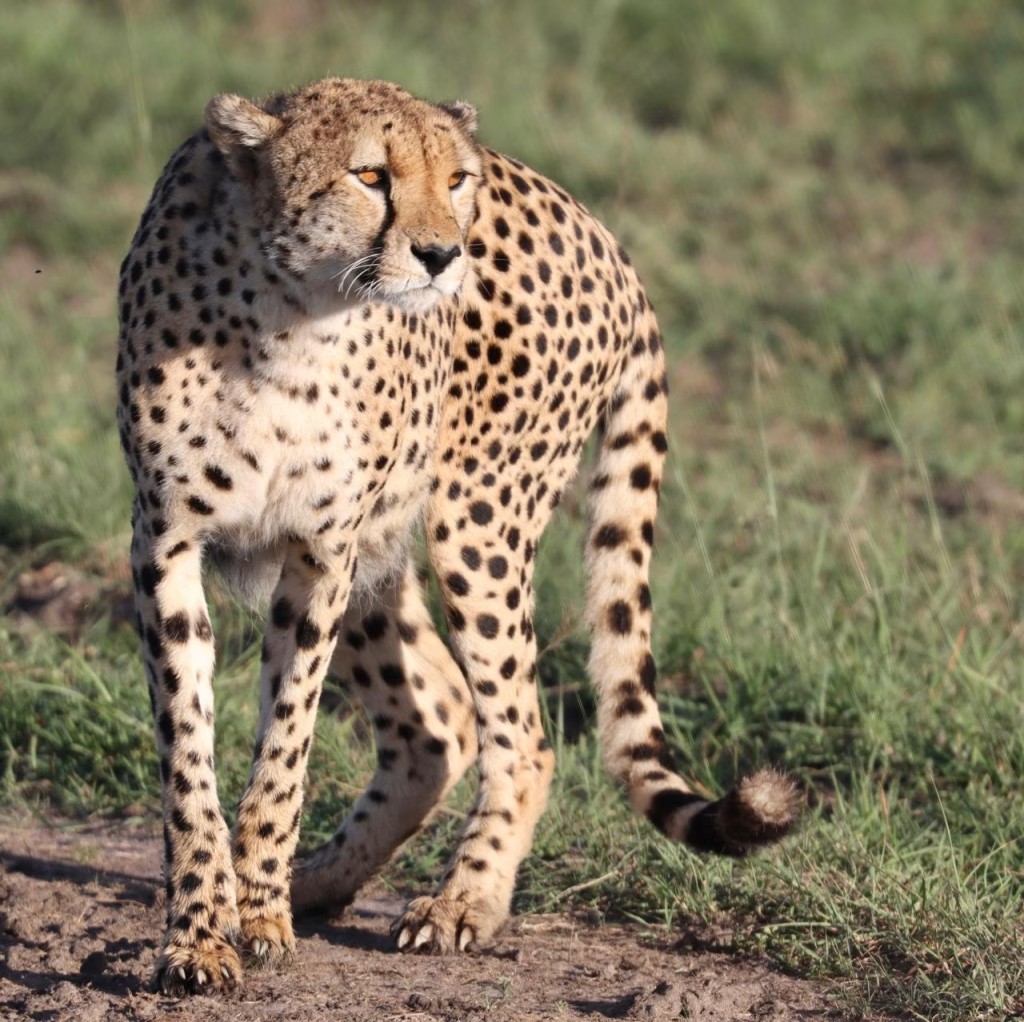
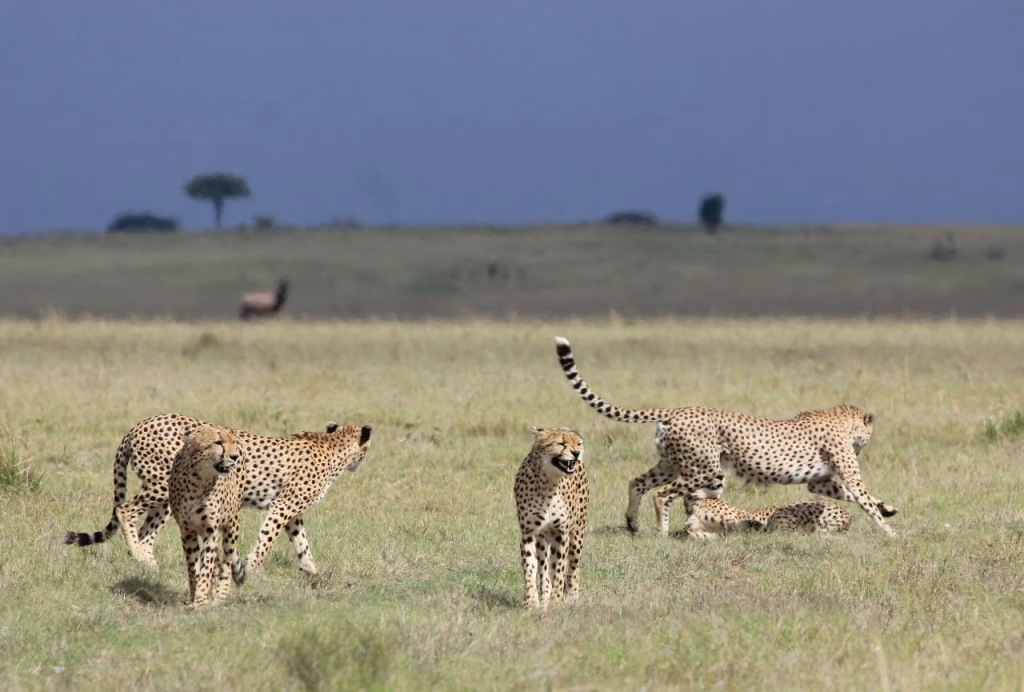
Tano Bora Cheetah Coalition
Their rise to prominence began in late 2016 when they established their dominance over a vast stretch of the Maasai Mara. Unlike solitary males or smaller coalitions, the Tano Bora had the numbers to successfully take on larger prey, including adult wildebeest—an uncommon feat for cheetahs, who typically hunt smaller gazelles. Their exceptional teamwork in hunting, defending kills from hyenas, and controlling prime territory set them apart.
The Significance of the Tano Bora Cheetah Coalition
Tano Bora was more than just a successful cheetah group—it became a global sensation. Wildlife photographers, safari guides, and researchers closely followed their movements, capturing dramatic moments of their hunts and social interactions. The coalition was featured in documentaries and numerous wildlife reports, earning a reputation as the most famous cheetah coalition in the world.
Their success also contributed to scientific understanding of cheetah behavior. While coalitions are known to be advantageous for survival, the Tano Bora demonstrated just how powerful such alliances could be when properly maintained. They expanded the known limits of what male cheetahs could achieve together, and their dominance over the Mara’s open savannah was unmatched.
However, like all great dynasties, the coalition’s strength would not last forever. Over time, internal conflicts, territorial battles, and natural dangers began to take a toll, leading to the gradual loss of its members—until only one remained.
Origins and Formation of the Tano Bora Coalition
The Tano Bora coalition, meaning The Magnificent Five in Swahili, was a unique alliance of five male cheetahs in Kenya's Maasai Mara. Their formation defied typical cheetah behavior, as coalitions generally consist of two or three related males. This exceptional group, composed of two pairs of brothers and a solitary male, demonstrated remarkable teamwork and hunting efficiency, making them one of the most famous cheetah groups in the world.
The Early Years in Naboisho Conservancy
Four of the Tano Bora males—Winda, Olonyok, Leboo, and Olarishani—were first seen together in Naboisho Conservancy, a private conservancy adjacent to the Maasai Mara. These four had likely formed their bond there before the arrival of the fifth member, Olpadan, who joined them in December 2016. The full coalition of five later moved into the Maasai Mara National Reserve in 2017, where they established their primary territory.
Though the Maasai Mara became their main stronghold, the coalition occasionally ventured back into neighboring conservancies like Naboisho to avoid high tourist activity, as well as threats from lions and hyenas. Their ability to adapt and move between different areas contributed to their long-term survival and dominance.
Olpadan: The Latecomer Turned Leader
Olpadan, whose name means "Great Shooter" in the Maa language, was the last to join the coalition. Unlike the others, he was initially a solitary male. He is believed to have roamed from the Serengeti before entering the Maasai Mara region in late 2016. Upon encountering Winda, Olonyok, Leboo, and Olarishani, he successfully integrated into their group. Despite being the last to join, Olpadan's bold and assertive nature eventually led him to become the coalition’s dominant leader.
Olarishani and Olonyok: The Judicious Brothers
Olarishani and Olonyok were a pair of brothers whose bond played a crucial role in the coalition’s cohesion. Olarishani’s name means "Judge," hinting at his observant and strategic nature, while Olonyok's name means "One who puts effort into achieving better results." Though details about their origins remain unclear, their presence in Naboisho Conservancy before the full coalition formed suggests that they had already spent time establishing themselves before Olpadan arrived.
Winda and Leboo: The Hunting Duo
Winda and Leboo were another pair of brothers within the coalition. Winda’s name means "Hunter" in Kiswahili, reflecting his agility and skill in tracking prey, while Leboo translates to "The one who is always within a group" in Maa, emphasizing his social nature. These two were often seen hunting together, displaying remarkable coordination and teamwork.
The Formation of a Historic Tano Bora Cheetah Coalition
By early 2017, all five cheetahs had moved from Naboisho Conservancy into the Maasai Mara National Reserve, a vast open landscape offering better hunting opportunities. Their decision to remain in the Mara was strategic—it provided an abundance of prey and fewer territorial disputes with other cheetahs.
While most male cheetahs form smaller coalitions, the Tano Bora’s decision to unite as five was unprecedented. Their size gave them significant advantages, including:
Taking down larger prey than typical cheetahs, such as wildebeest and zebra foals.
Defending kills from hyenas and lions more effectively.
Expanding their territory, as their combined strength allowed them to dominate prime hunting grounds.
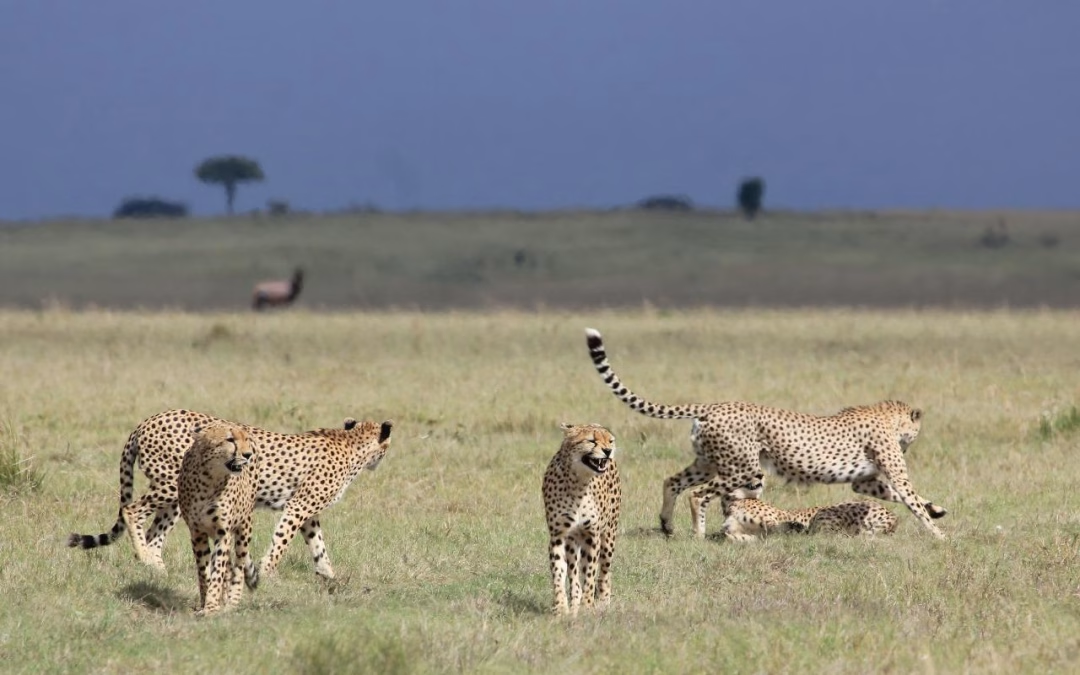
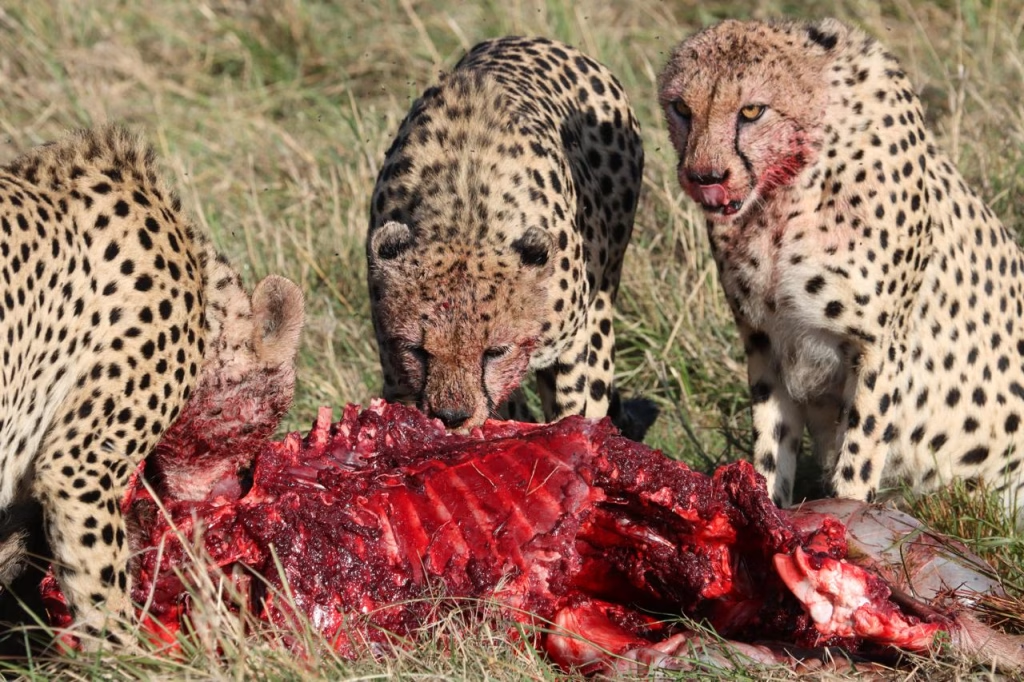
Three members of the coalition enjoying a kill
Their rise to dominance in the Maasai Mara marked the beginning of an era in which the Tano Bora coalition became legendary, drawing worldwide attention from wildlife photographers, researchers, and safari-goers.
Life Within the Tano Bora Coalition
The Tano Bora coalition was unlike any other cheetah group ever documented in the Maasai Mara. While male cheetahs often form small alliances to improve their survival chances, a coalition of five was unprecedented. This large, well-coordinated group allowed them to dominate their environment in ways that single males or smaller coalitions could not.
Social Structure and Hierarchy
Within the coalition, Olpadan gradually took on the role of dominant leader. His assertiveness and aggression ensured that he often had first access to food and mating opportunities. However, the rest of the group functioned as a well-balanced team, cooperating on hunts and defending their territory together.
Despite their unity, occasional fights broke out, particularly when tensions arose over mating rights or feeding order. Researchers and guides observed aggressive interactions between Olpadan and other members, a behavior that would later play a role in the coalition’s decline.
Unmatched Hunting Prowess
Cheetahs are known for their speed, but hunting is often challenging due to competition from larger predators like lions and hyenas. However, Tano Bora’s numbers gave them an extraordinary advantage. Unlike typical cheetah coalitions that primarily target Thomson’s gazelles, the Tano Bora was capable of taking down larger prey, including:
Adult wildebeest (unusual for cheetahs, who typically hunt smaller ungulates).
Topi and impala, which required precise coordination.
Zebra foals, a difficult but rewarding target.
Their ability to coordinate complex hunting strategies set them apart. One or two cheetahs would often initiate the chase, exhausting the prey, while the others waited in strategic positions to cut off escape routes. This teamwork ensured a higher hunting success rate compared to solitary cheetahs or smaller coalitions.
Challenges and Conflicts
Although their size was an advantage, it also posed challenges. A large group required more food, which meant they had to hunt frequently. Furthermore, their kills attracted attention from hyenas, lions, and even scavenging leopards. While they could fend off smaller groups of hyenas, larger clans often forced them to abandon their meals.
In addition, their fame among safari-goers meant that they were often followed by multiple tour vehicles. Although the Maasai Mara has strict guidelines on wildlife viewing, excessive human presence occasionally disrupted their hunts and forced them to move into quieter areas, such as Naboisho Conservancy.
Despite these challenges, the Tano Bora coalition remained at the top of the Mara’s cheetah hierarchy for years, outlasting many other male groups.
Hunting Prowess and Notable Achievements
The Tano Bora Cheetah coalition was not only famous for its unique size but also for its exceptional hunting abilities. Their teamwork allowed them to defy the typical limitations of cheetah predation, making them one of the most successful hunting groups ever documented in the Maasai Mara.
Mastering the Hunt
Cheetahs are designed for speed, but their slim build makes them vulnerable to injury, and most prefer to hunt smaller prey such as Thomson’s gazelles. However, the Tano Bora coalition’s numbers gave them a major advantage, allowing them to take down larger and more powerful animals that individual cheetahs or smaller groups would not normally attempt.
Some of their most impressive hunting feats included:
Adult wildebeest – Normally beyond a cheetah’s capacity, but Tano Bora successfully worked together to bring them down.
Topi and impala – Fast and agile antelopes, requiring excellent coordination to catch.
Zebra foals – A rare target for cheetahs due to the protective nature of adult zebras.
Their hunting strategy was highly sophisticated:
Divide and conquer – Some members would flush out prey while others waited in strategic positions.
Precision teamwork – They would take turns chasing prey, allowing them to conserve energy while exhausting their target.
Rapid kills – By working together, they could quickly bring down larger animals before scavengers arrived.
This unique hunting method ensured their survival in a highly competitive ecosystem filled with larger predators such as lions and hyenas.
Dominance Over Territory
Because they were so successful in hunting, Tano Bora had an unusually large home range. Unlike smaller cheetah groups that had to avoid confrontations, the coalition was able to secure prime hunting grounds in the Maasai Mara National Reserve and its surrounding conservancies.
However, their presence sometimes attracted unwanted attention. Lions, which are natural enemies of cheetahs, often viewed them as competition. As a result, Tano Bora had to constantly navigate dangerous encounters with larger predators while maintaining their hunting success.
Survival Against the Odds
Unlike lions or hyenas, cheetahs have a low success rate in hunts, often failing due to exhaustion, interference from other predators, or simple miscalculations. Yet, Tano Bora maintained an impressive success rate thanks to their:
Exceptional teamwork
Strategic approach to hunting
Ability to adapt to different terrains
For years, their dominance over the Mara remained unchallenged, making them one of the most respected and admired cheetah groups in the world.
Reproduction and Associations with Notable Females
While male cheetahs typically form coalitions to secure and defend prime territories, they do not play a direct role in raising offspring. However, Tano Bora’s size and dominance gave them exclusive access to some of the most sought-after female cheetahs in the Maasai Mara, potentially contributing to the next generation of Mara-born cheetahs.
Mating with Nashipae
One of the most significant mating encounters attributed to the Tano Bora coalition was with Nashipae, a well-known female cheetah in the Maasai Mara. Nashipae, whose name means happy one in Maa, was a prolific and successful mother, raising multiple litters despite the high cub mortality rate in cheetahs.
Several reports and observations suggest that Nashipae mated with members of the Tano Bora coalition, leading to speculation that some of her offspring may have inherited the coalition’s strong genetic traits. Given Tano Bora’s dominance over the Mara, it is highly likely that other females also sought them out during their prime years.
Encounters with Siligi and Other Females
Another famous female associated with the coalition was Siligi, a skilled mother who successfully raised cubs in the harsh Mara environment. Interestingly, Siligi was also Olpadan’s sister, which meant that while he remained in the coalition, he did not mate with her, as cheetahs avoid inbreeding within close relatives.
Beyond Nashipae and Siligi, the coalition was observed interacting with Nora the Queen, one of the oldest female cheetahs i the Mara, and several unnamed females over the years. However, because cheetahs do not form long-term bonds after mating, these encounters were brief. The dominant male at the time, usually Olpadan, would guard a female for several days, preventing rival males from approaching until she was no longer receptive.
The Legacy of Tano Bora’s Offspring
Although the exact number of cubs fathered by the Tano Bora males is unknown, their dominance in the Maasai Mara suggests that their genetic legacy likely lives on. Many of Nashipae’s and other females' cubs reached adulthood, continuing the cheetah lineage in the Mara.
The coalition’s strong hunting abilities, adaptability, and teamwork may have given their offspring an advantage in survival—ensuring that even after their eventual decline, their influence on the cheetah population in the Mara remains.
Unique Characteristics and Global Fascination
The Tano Bora coalition was more than just a successful group of male cheetahs—it became a global sensation. Wildlife photographers, safari guides, researchers, and big cat enthusiasts closely followed their movements, making them one of the most photographed, studied, and admired cheetah groups in history.
Why Was the Tano Bora Cheetah Coalition So Famous?
Several factors set the Tano Bora apart from other cheetah coalitions:
Unprecedented Size – Most male cheetah coalitions consist of two or three individuals. Tano Bora, with five members, was the largest known coalition in the Maasai Mara, defying typical cheetah behavior.
Unmatched Hunting Skills – Their cooperative hunting strategy allowed them to take down much larger prey than most cheetahs, including adult wildebeest and zebra foals.
Dominance Over the Mara – Their presence was so strong that they controlled large territories and were rarely challenged by rival male cheetahs.
Celebrity Status – Their rise coincided with a surge in wildlife photography and social media coverage, making them internet-famous.
Documentary Features – They were showcased in wildlife documentaries, including Netflix’s Night on Earth, further cementing their status as legends.
A Favorite Among Safari Enthusiasts
For years, the coalition was a top attraction for visitors to the Maasai Mara. Safari guides knew that if tourists were lucky enough to witness Tano Bora in action, they would see something truly spectacular—whether it was an intense hunt, a dramatic interaction with hyenas, or the group lounging in the golden Mara grasslands.
Their cooperative nature and strikingly similar markings made them a dream subject for photographers, and images of the five cheetahs standing together became some of the most iconic wildlife photographs of the past decade.
A Lasting Legacy
Even though the coalition has now dwindled to a single survivor, their impact on cheetah conservation and research is undeniable. They provided invaluable insights into male cheetah coalitions, territory control, and hunting behavior, and their genetic legacy likely continues through their offspring.
With Olonyok now alone, the chapter of Tano Bora as a coalition has ended. However, their story will remain one of the greatest wildlife sagas ever witnessed in the Maasai Mara.
The Decline of the Tano Bora Cheetah Coalition
For years, the Tano Bora coalition thrived as the dominant force among the Maasai Mara’s cheetah population. However, like all great dynasties, their reign eventually came to an end. Internal conflicts, territorial disputes, and the ever-present dangers of the wild gradually led to their downfall, one tragic loss at a time.
Olpadan’s Demise – The Fall of the Leader
In late 2021, Olpadan, the coalition’s dominant male, separated from the group to go mate with Nora the Queen, a dominant female. However, when he tried to rejoin his companions, tensions arose. The remaining four rejected him aggressively, leading to a violent confrontation.
By early January 2022, Olpadan was found severely injured, likely from wounds inflicted by his former allies. In his weakened state, he became vulnerable to the dangers of the Mara, and he ultimately succumbed to his injuries, marking the first major loss for the coalition.
Olarishani’s Death – Another Blow in 2022
Just a month later, on February 13, 2022, tragedy struck again. Olarishani was killed by lions, a common threat to cheetahs in the Mara. Unlike leopards, who can escape into trees, or hyenas, which can put up a fight, cheetahs are built for speed, not strength. When caught off guard, they have little chance of survival against lions.
Olarishani’s death shook the coalition, reducing their number to three and forcing them to adapt once again.
Leboo’s Tragic End – Human-Wildlife Conflict
Later in July 2022, Leboo was killed in an incident involving human-wildlife conflict. While exact details remain unclear, reports suggest that he may have wandered into an area where local livestock were kept, leading to retaliation.
This was another devastating blow, leaving only Winda and Olonyok—the last two members of what was once a formidable force.
Winda’s Passing – The Last Loss Before Solitude
For nearly three years, Winda and Olonyok remained together, navigating the Mara as a duo. However, in early March 2025, Winda suffered a serious leg injury. Although vets treated him, his condition worsened, and on March 15, 2025, he passed away.
At 10.5 years old, Winda had outlived all his former coalition members, but in the end, his body could no longer endure the hardships of the wild.
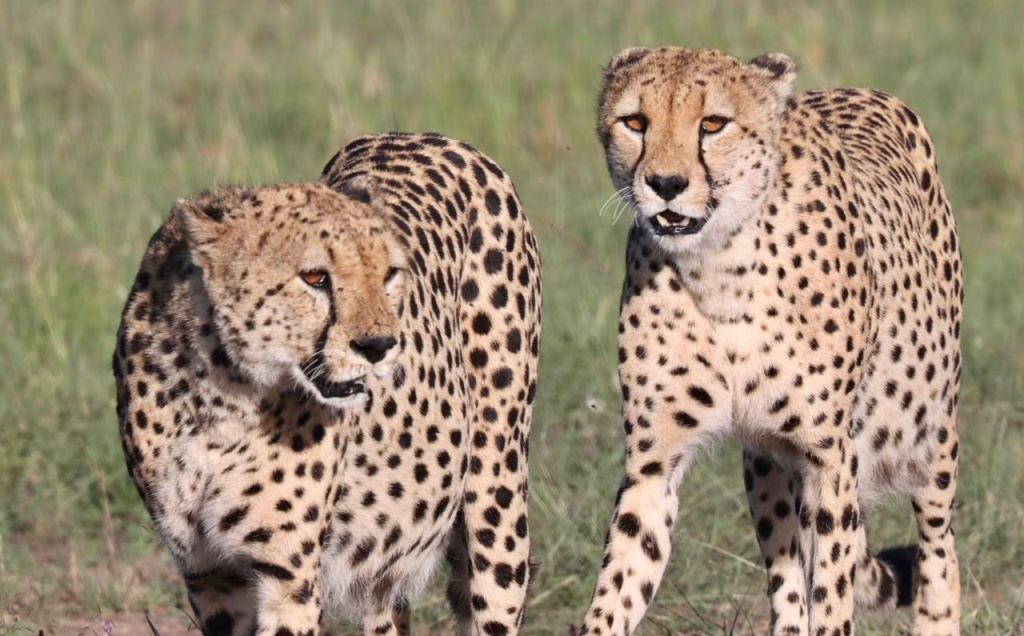
Winda and Olonyok
Olonyok – The Last Survivor
Now, Olonyok is the sole surviving member of Tano Bora Cheetah Coalition. His future remains uncertain, as lone male cheetahs face immense challenges, including competition from rival males and difficulty securing food without cooperative hunting.
With his once-great coalition gone, Olonyok now roams the Mara alone, a living testament to the rise and fall of one of Africa’s most legendary cheetah coalitions.
About Cheetahs
Cheetahs (Acinonyx jubatus) are among the most iconic big cats in Africa, renowned for their speed, agility, and vulnerability to larger predators. While the Tano Bora coalition’s story is one of both triumph and tragedy, it also highlights the broader challenges that cheetahs face in the wild.
Are Cheetahs Endangered?
Yes, cheetahs are classified as Vulnerable on the IUCN Red List, meaning their population is declining. Some key threats include:
Habitat Loss – Expanding human settlements and farmland reduce available space for cheetahs to hunt and roam.
Human-Wildlife Conflict – Cheetahs sometimes prey on livestock, leading to retaliation from farmers.
Competition from Other Predators – Lions, hyenas, and leopards frequently steal cheetah kills or kill their cubs, contributing to their high mortality rate.
Low Genetic Diversity – Cheetahs have an unusually small gene pool, making them more vulnerable to disease and reproductive challenges.
With fewer than 7,000 cheetahs remaining in the wild, conservation efforts are crucial to their survival.
Where Are Cheetahs Found?
Cheetahs once roamed across Africa, the Middle East, and even parts of India. Today, they are primarily found in:
Africa – The largest populations exist in Namibia, Botswana, Kenya, Tanzania, and South Africa.
Iran – A small, critically endangered population of Asiatic cheetahs survives in Iran.
The Maasai Mara remains one of the best places in the world to see wild cheetahs, thanks to its open grasslands, abundance of prey, and well-regulated tourism practices.
Scientific Name and Classification
Cheetahs belong to the genus Acinonyx and are scientifically classified as follows:
Kingdom: Animalia
Phylum: Chordata
Class: Mammalia
Order: Carnivora
Family: Felidae
Genus:Acinonyx
Species:Acinonyx jubatus
What Do Cheetahs Eat?
Cheetahs are carnivores, primarily hunting medium-sized ungulates such as:
Thomson’s gazelles (their most frequent prey in the Maasai Mara)
Impala
Topi and hartebeest calves
Wildebeest calves
Guineafowl and hares (on rare occasions)
Cheetahs rely on speed, stealth, and precision rather than brute strength, making them different from other big cats like lions and leopards.
How Fast Can a Cheetah Run?
Cheetahs hold the title of fastest land mammal, reaching speeds of up to 112 km/h (70 mph) in short bursts. Their unique adaptations for speed include:
A lightweight, aerodynamic body
Enlarged nasal passages for better oxygen intake
A flexible spine that extends their stride length
Non-retractable claws for better grip
However, cheetahs can only sustain top speeds for about 20–30 seconds before overheating or exhausting themselves.
Visit Maasai Mara with Campo East Africa Safaris
The Maasai Mara is one of the most breathtaking wildlife destinations in the world. It has been home to legendary cheetahs like the Tano Bora coalition, the famous female Nashipae, and many more incredible big cats. Seeing these predators in their natural habitat is an experience like no other, offering visitors a chance to witness high-speed chases, strategic hunts, and rare wildlife interactions.
A safari in the Maasai Mara National Reserve provides the best opportunities to see cheetahs up close. The vast, open savannahs make it easier to spot these elusive cats as they stalk their prey, interact with their cubs, or patrol their territory. Whether you’re an experienced wildlife photographer or a first-time visitor, the Mara promises unforgettable moments.
To ensure the best safari experience, it’s crucial to go with professional guides who know the terrain and the wildlife intimately. With Campo East Africa Safaris, you can explore the Maasai Mara in comfort and safety while maximizing your chances of seeing cheetahs in the wild.
Book your Maasai Mara safari today and experience the beauty, drama, and wonder of Africa’s most famous wilderness!
In 2024, Kenya's tourism sector not only rebounded—it soared to unprecedented heights. After years of steady recovery, the nation celebrated a remarkable year of growth, driven by innovative strategies, improved infrastructure, and a renewed global appetite for travel. According to the Tourism Sector Performance Report 2024 by the Tourism Research Institute, Kenya welcomed 2,394,376 international visitors, a 14.6% increase from 2023, alongside a historic surge in earnings to KES 452.20 billion, marking 19.79% growth.
This impressive performance reflects Kenya's ongoing commitment to creating world-class visitor experiences, leveraging digital transformation, and strengthening its position as a top-tier global destination. From revitalized safari circuits to cutting-edge conference venues, Kenya’s tourism story in 2024 is one of strategic growth, resilience, and undeniable appeal.
Kenya Tourism Sector Performance 2024 at a Glance
Kenya’s tourism industry in 2024 set a new benchmark, cementing the country's place as a premier global destination. The year closed with 2,394,376 international arrivals, a solid 14.6% rise from 2,089,259 arrivals in 2023. Even more impressive, tourism earnings surged to KES 452.20 billion, up 19.79% from KES 377.49 billion the previous year.
This remarkable growth signals not just recovery but robust expansion beyond pre-pandemic levels. From wilderness safaris to bustling urban conferences, Kenya’s tourism sector flourished across multiple fronts. Monthly arrivals reflected consistent upward trends, with August 2024 peaking at 249,086 visitors—the highest in recent years.
The strategic rollout of initiatives like the Electronic Travel Authorization (ETA) system, targeted digital marketing, and enhanced air connectivity helped create a seamless and attractive travel experience. With a diverse range of experiences and reliable infrastructure, Kenya proved its readiness to host both leisure travelers and high-profile global events, setting the stage for even greater success ahead.
Key Drivers Behind the Growth
Kenya’s record-breaking tourism performance in 2024 didn’t happen by chance. A combination of strategic interventions and innovations propelled the sector forward, ensuring a smooth visitor experience and global visibility. These key drivers played a crucial role:
1. Electronic Travel Authorization (ETA)
In January 2024, Kenya launched the Electronic Travel Authorization (ETA), replacing traditional visa processes. This streamlined digital system simplified entry procedures for international visitors, reducing wait times and increasing traveler convenience.
2. Aggressive Global Marketing Campaigns
Kenya expanded its digital footprint with targeted online promotions that highlighted its rich safari experiences, coastal retreats, and cultural heritage. The Kenya Tourism Board (KTB) led campaigns in high-potential markets, resulting in significant arrival boosts from countries like China (+47.4%), Poland (+52.3%), and Somalia (+49.6%).
3. Enhanced Air Connectivity
New routes and increased flights opened Kenya’s skies wider than ever. Air Asia, Air Dubai, and the relaunch of Brussels Airlines added vital links between Kenya and key global hubs, making travel smoother and more frequent for international guests.
4. Tourism Product Diversification
From traditional wildlife safaris to adventure sports, cultural experiences, and luxury beach getaways, Kenya expanded its offerings. New experiences, combined with digital innovations like smart booking platforms, made it easier for tourists to customize their travel.
5. Technology Integration
Kenya embraced digital tools to enhance the visitor experience. From online travel authorizations to seamless booking options, technology made travel not only easier but also more personalized and secure.
Together, these strategies didn’t just recover lost ground—they pushed Kenya ahead, attracting both new visitors and returning travelers eager for fresh, memorable experiences.
Top Source Markets: Who is Visiting Kenya?
Kenya’s tourism success in 2024 was fueled by impressive growth across its diverse source markets. The country strengthened its appeal globally, with both traditional and emerging markets contributing significantly to the surge in arrivals.
Leading the Pack
The United States maintained its position as Kenya's largest source market, delivering 306,501 visitors, which accounted for 12.8% of total arrivals. Close behind were Uganda with 225,559 arrivals (9.4%) and Tanzania with 203,290 arrivals (8.4%), reflecting strong regional ties and cross-border travel.
Fastest Growing Markets
Some markets showed extraordinary growth compared to 2023, including:
Czech Republic: +121.9% (from 4,727 to 10,490 visitors)
Burundi: +57.1%
Sudan: +52.6%
Poland: +52.3%
China: +47.4%
Regional Breakdown
Kenya’s visitors came from all over the world:
Africa: 975,883 visitors (40.8%)
Europe: 680,373 visitors (28.1%)
Americas: 376,019 visitors (15.7%)
Asia: 284,277 visitors (12.1%)
This strong mix of long-haul and regional travelers provided stability and diversified Kenya’s tourism base. Growth was particularly notable from Asia (+19.2%) and Africa (+17.9%), reflecting effective marketing and improved connectivity within these regions.
With strategic focus on high-potential countries, Kenya positioned itself as a destination that appeals to both returning visitors and new explorers eager to experience its rich landscapes and vibrant culture.
Where are Tourists Entering Kenya?
Kenya’s strategic location and improved transport infrastructure have made it accessible through multiple entry points, with air travel continuing to dominate. In 2024, enhanced air connectivity and modernized border facilities contributed significantly to the seamless arrival experience.
Key Entry Points
Jomo Kenyatta International Airport (JKIA) led the way, handling 1,622,745 arrivals—an impressive 67.8% of the total. As the main gateway to Kenya, JKIA's upgraded facilities and expanded flight options made it the top choice for international travelers.
Moi International Airport (MIA) in Mombasa recorded 204,538 arrivals (8.5%), highlighting the appeal of Kenya’s coastal tourism hubs.
Land and Sea Borders
For regional visitors, Kenya’s land borders played a vital role:
Busia Border: 180,279 arrivals (7.5%), mainly from Uganda.
Namanga Border: 138,436 arrivals (5.8%), heavily used by Tanzanian visitors.
Malaba Border: 52,088 arrivals (2.2%), another key point for cross-border trade and travel.
Sea entry points, such as Kilindini Seaport and Shimoni Seaport, supported the growing cruise tourism sector, contributing to Kenya’s efforts to diversify its tourism entry avenues.
Tailored Experiences by Entry
Different entry points cater to different traveler purposes:
JKIA welcomes a balanced mix of holidaymakers (48.7%) and business travelers (24.2%).
MIA is predominantly for holiday/leisure visitors (89.8%), reinforcing Mombasa’s beach tourism appeal.
Border crossings like Busia and Namanga are hubs for regional business and visiting friends and relatives (VFR).
Kenya’s ability to facilitate smooth entries across air, land, and sea has made the destination more accessible than ever, ensuring a positive first impression for visitors from all corners of the world.
Purpose of Visit: Why are People Visiting Kenya?
Kenya's diverse tourism offerings attract visitors for a wide range of reasons, making the country much more than just a safari destination. In 2024, the data reveals how Kenya continues to cater to varied traveler interests.
Leading Reasons for Visiting Kenya
Holiday/Leisure – 44.2% Kenya’s iconic safari circuits, tropical beaches, and rich cultural experiences remain the primary draw for nearly half of all visitors. Popular destinations like the Maasai Mara, Diani Beach, and Mount Kenya continue to charm leisure travelers from around the world.
Business/Conference (MICE) – 26.9% Kenya's growing influence as a business and conference hub contributed significantly. With world-class venues like the Kenyatta International Convention Centre (KICC) and high-profile events, Kenya’s Meetings, Incentives, Conferences, and Exhibitions (MICE) sector thrived.
Visiting Friends and Relatives (VFR) – 22.0% Strong regional ties, especially with neighboring East African countries, made VFR a key purpose of travel, particularly from Uganda, Tanzania, and Burundi.
Transit Travelers – 4.2% As a regional air hub, many travelers passed through Kenya en route to other destinations, often extending layovers to experience local attractions.
Other Niche Purposes
Education: 0.9%
Religion: 0.7%
Medical: 0.4%
Employment: 0.4%
Sports: 0.3%
These smaller but significant segments reflect growing opportunities in specialized tourism areas, such as medical tourism, faith-based travel, and sports tourism.
With such a balanced mix of travel purposes, Kenya’s tourism strategy continues to diversify, ensuring sustained growth across multiple visitor profiles.
America and Oceania
Europe and Africa
Asia and Middle East
Cruise Tourism and MICE Growth
In 2024, Kenya's tourism sector expanded far beyond traditional safari and beach holidays, with cruise tourism and the MICE (Meetings, Incentives, Conferences, and Exhibitions) sector experiencing record growth. These high-potential segments have become critical drivers of year-round visitor numbers.
Cruise Tourism: Sailing to New Heights
Kenya's ports welcomed a remarkable 6,561 cruise tourists, up from 2,490 in 2023, marking an extraordinary 163.5% increase. Mombasa and Lamu continued to feature prominently on cruise itineraries, appealing to travelers seeking historical, cultural, and coastal experiences.
This surge reinforces the potential of Kenya’s Indian Ocean ports as major cruise destinations and underlines the growing global interest in combining sea voyages with onshore safari adventures.
MICE Sector: A Conference Destination on the Rise
The MICE segment accounted for 27% of total tourist arrivals in 2024, up from 24% in 2023, as Kenya positioned itself as a premier destination for high-profile events. Key highlights include:
37,405 international delegates, a 7.4% increase from the previous year.
699,469 local delegates, reflecting 3.3% growth.
Several prestigious conferences boosted these numbers, including:
The African Development Bank (AFDB) Annual Meetings.
The IDA for Africa Heads of State Summit.
The Africa Fertilizer Conference.
These events filled hotels, venues, and restaurants, supporting the hospitality industry while showcasing Kenya’s capacity for world-class event hosting.
Future Opportunities
The impressive growth of both cruise tourism and MICE signals opportunities for further investment in:
Expanding cruise infrastructure.
Developing ultra-modern convention centers.
Creating bespoke event packages combining business, leisure, and safari experiences.
By tapping into these sectors, Kenya is diversifying its tourism economy and ensuring steady visitor inflows throughout the year.
Accommodation Sector Rebound
The hospitality industry in Kenya thrived in 2024, driven by the surge in international arrivals, robust domestic travel, and the booming conference sector. Accommodation facilities across the country experienced significant increases in both occupancy rates and overall bed-night numbers.
Bed-Night Occupancy Growth
In 2024, total bed-nights occupancy hit 9,992,721, a 16% increase from 8,632,803 in 2023. This growth reflects strong demand across leisure, business, and regional travel segments.
Breakdown of Occupancy Gains
International Bed Occupancy: Rose from 4,014,707 in 2023 to 4,818,755 in 2024, marking a 20% growth.
Domestic Bed Occupancy: Increased by 12%, from 4,618,094 in 2023 to 5,173,966 in 2024.
Room Occupancy
Parallel to bed-nights, room occupancy also jumped by 19%, from 6,417,531 in 2023 to 7,609,856 in 2024, signaling heightened activity in hotels, lodges, and resorts across key destinations such as Nairobi, Mombasa, and the Maasai Mara.
What Drove This Surge?
Major conferences and MICE events filled urban hotels.
Strong domestic tourism during public holidays and school breaks kept facilities busy.
Continued popularity of Kenya's signature safari lodges and beach resorts with international tourists.
The positive trends across both international and domestic accommodation sectors highlight Kenya’s growing capacity to handle high visitor volumes while maintaining quality experiences.
Employment and Economic Impact
Tourism’s resurgence in 2024 had a powerful ripple effect on employment, fueling job creation and stabilizing livelihoods across Kenya. The sector's growth extended well beyond visitor arrivals and earnings, as businesses in hospitality, transport, and cultural tourism scaled up operations to meet demand.
Wage Employment Rebound
According to the Tourism Sector Performance Report 2024, wage employment in tourism-linked industries rose sharply, with 3,138,300 jobs recorded in 2023. This marked an increase of 122,900 jobs from 2022, representing a 4.1% growth.
This sustained rise in employment underscores the sector’s recovery from the COVID-19 pandemic, during which employment dipped to 2,742,600 in 2020. By 2023, jobs not only rebounded but exceeded pre-pandemic levels of 2,928,400 (2019), reflecting the industry's resilience and its critical role in Kenya’s economy.
Jobs Across the Country
From the bustling hotels of Nairobi and Mombasa to the lodges of Laikipia and Amboseli, the surge in tourism brought increased opportunities for thousands of Kenyans in:
Accommodation and food services.
Tour guiding and transport services.
Handicrafts and cultural performances.
As Kenya’s tourism sector continues to thrive, it remains a key employer and driver of inclusive economic growth, benefiting both urban centers and rural communities.
Kenya's Tourism Outlook for 2025 and Beyond
After a landmark year in 2024, Kenya’s tourism industry is set to soar even higher. The Tourism Research Institute projects that Kenya will attract 3 million international tourists in 2025, generating approximately KES 560 billion in inbound earnings. This trajectory signals not just recovery but a full-scale transformation toward sustainable, high-quality tourism.
Key Trends Shaping the Future
1. Sustainability and Green Tourism
Eco-conscious travelers are driving demand for greener experiences. Kenya is actively encouraging businesses to adopt green certifications, carbon-neutral accommodations, and responsible tourism practices. These efforts aim to preserve natural resources while appealing to the growing market of environmentally aware visitors.
2. Wellness and Solo Travel
Kenya is positioning itself as a destination for wellness tourism, tapping into global trends in yoga retreats, spa resorts, and mindfulness experiences set against stunning natural backdrops. The rise of solo travelers also presents opportunities to curate personalized, safe, and enriching journeys across Kenya.
3. Cruise Tourism Expansion
Following 163.5% growth in cruise passenger arrivals in 2024, further investments in cruise infrastructure are anticipated. Enhanced docking facilities and tailored shore excursions are expected to solidify Kenya's reputation as a standout stop on Indian Ocean cruise routes.
4. Tech-Driven Visitor Experiences
From AI-powered concierge services to smart energy management in hotels, Kenya is embracing digital innovation. These solutions will enhance efficiency, personalize guest experiences, and maintain Kenya’s competitiveness on the global stage.
5. Growth of MICE Tourism
Building on the success of high-profile conferences in 2024, Kenya is set to attract more international events. Planned investments in ultra-modern convention centers, better regional connectivity, and bespoke event packages will strengthen the country's position as Africa’s go-to destination for business tourism.
The Road Ahead
By focusing on sustainability, technology, and diversified tourism products, Kenya is charting a path to long-term success. The country’s ambitious plans aim to future-proof the tourism sector while offering unforgettable, authentic experiences that travelers crave.
Why Now Is the Perfect Time to Experience Kenya
Kenya is no longer just a safari destination—it's a dynamic, world-leading travel hotspot that has reinvented itself through innovation, sustainability, and unmatched hospitality. With record-breaking visitor numbers, skyrocketing earnings, and exciting growth across cruise tourism, MICE, and eco-travel, the stage is set for unforgettable journeys in 2025 and beyond.
Whether you're dreaming of witnessing the Great Migration, relaxing on the serene shores of Diani, or attending a global conference in Nairobi, Kenya is ready to deliver. But to truly unlock the magic of this extraordinary country, you need a partner who understands every hidden gem, every smooth transfer, and every authentic moment.
At Campo East Africa Safaris, we specialize in crafting tailored, seamless safari experiences that showcase the very best of Kenya. From luxury lodge safaris to off-the-beaten-path adventures, we take care of every detail—so all you have to do is arrive.
Ready to make 2025 the year you finally see Kenya at its best? Reach out to us through our contact page, and let’s start planning your journey.
Because with Kenya on the rise, there has never been a better time to visit. And there’s no better way to explore than with professionals who know the land, the people, and the adventure waiting for you.






Recent Comments