
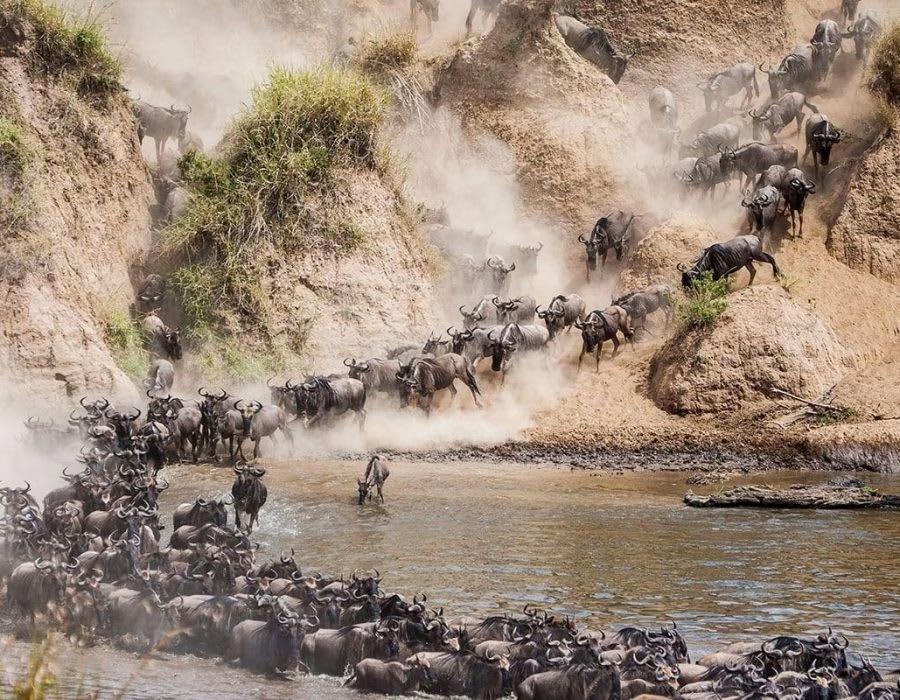
A fly-in safari is usually worth the upgrade when time, comfort and extra game-drive hours matter more than the lowest total price. A road safari offers better value for travelers who enjoy the changing Kenyan landscape and want to include several destinations in one journey. The right choice depends on your available days, budget, luggage and preferred pace.
The Masai Mara is one of Kenya’s most rewarding wildlife destinations, but getting there shapes the entire safari. You can travel by road from Nairobi through the Great Rift Valley and Narok, or fly from Nairobi’s Wilson Airport to one of the Mara’s bush airstrips.
Neither option is automatically better. A road safari can become part of the adventure, offering landscapes, cultural context and the flexibility to connect destinations. A fly-in safari protects your time, reduces long transfer days and can make a short itinerary feel substantially more relaxed.
Road vs fly-in safari: the answer at a glance
| Decision factor | Road safari to the Masai Mara | Fly-in safari to the Masai Mara |
|---|---|---|
| Journey time | Usually around 5–7 hours from Nairobi, depending on route, traffic, weather and camp location | Flight time is generally about 45–60 minutes, plus airport, airstrip and camp-transfer time |
| Starting point | Hotel or airport in Nairobi | Wilson Airport in Nairobi |
| Experience | A scenic overland journey through the Rift Valley and Narok | Aerial views and a faster transition from city to bush |
| Game-drive time | Can reduce first- and last-day wildlife time on a short itinerary | Usually preserves more time for game drives |
| Luggage | More flexible capacity, subject to vehicle space | Often restricted on light aircraft; soft bags are usually required |
| Best for | Longer Kenya circuits, value-conscious travelers and those who enjoy road travel | Short stays, luxury travelers, families, photographers and guests with limited time |
| Cost | Typically lower transport cost | Usually higher because of domestic flights and airstrip transfers |
| Ideal itinerary length | Five nights or more, especially for multi-park routes | Two to five nights in the Mara, or any itinerary where time is limited |
The road distance between Nairobi and the Mara varies by gate and camp location. Planning guidance commonly estimates around 5.5–6.5 hours to many Reserve access points, with longer journeys for western areas such as the Mara Triangle. Scheduled flights from Wilson Airport commonly take around 45–60 minutes, although the full door-to-camp journey includes check-in, airstrip arrival and onward camp transfer.masaimara+1
Choose a road safari if the journey matters
A road safari begins before you reach the Masai Mara. Leaving Nairobi, the route typically passes through the Great Rift Valley, descends toward Narok and continues across landscapes that show Kenya changing beyond the capital.
For some travelers, this is not simply a transfer. It is part of the story of the safari.
The value of an overland Kenya journey
Road travel can be especially rewarding if you have enough time to enjoy it. You can connect the Mara with destinations such as Lake Naivasha, Lake Nakuru, Amboseli, Samburu or Ol Pejeta without repeatedly returning to an airport.
A well-paced overland itinerary creates a sense of progression. You see the country’s landscapes shift, stop for breaks when appropriate and arrive at the Mara with a better understanding of the distance and diversity between Kenya’s ecosystems.
Our 8-day Kenya safari and 14-day Kenya safari are useful starting points for travelers who want to consider a broader overland circuit.
When road travel is better value
A road safari may be the strongest choice if:
- You have at least five or six nights available for Kenya
- You want to visit more than one park or conservancy
- You prefer to allocate budget toward more nights or a higher camp category
- You are comfortable with a long travel day
- You enjoy landscapes, roadside stops and the feeling of a classic overland journey
- You have luggage that would be inconvenient on a light aircraft
Road travel can be particularly practical for families or groups who have booked a private safari vehicle. The vehicle remains with your party, allowing luggage flexibility and more control over stops, subject to route timing and safety considerations.
What the road journey feels like
The reality of the drive should be clear before you book. A road transfer to the Mara is not a short airport run. It is a substantial journey that can be affected by Nairobi traffic, weather, road conditions, comfort breaks and the location of your lodge or camp.
The route is generally manageable in a proper safari vehicle, but it should not be presented as effortless. Travelers who dislike long drives, have limited mobility, are traveling with very young children or only have two nights in the Mara may find that flying offers significantly better value.
A road safari is best when you embrace the journey rather than simply endure it.
Choose a fly-in safari to protect your time
A fly-in safari Kenya itinerary is designed around one valuable resource: time in the wilderness.
Instead of spending most of a day on the road, you travel from Wilson Airport in Nairobi to a Mara airstrip, where our driver-guide or camp team meets you for the onward transfer. In many cases, that transfer becomes the beginning of your first game drive.
The flight itself is short, but its effect on a brief safari can be considerable. On a two- or three-night Masai Mara stay, avoiding two long road-transfer days can create more time for early mornings, relaxed lunches, afternoon drives and camp experiences.
Who benefits most from flying?
A fly-in itinerary is often worth considering for:
- Travelers with only two to four nights in the Masai Mara
- Honeymooners and couples prioritizing a relaxed pace
- Families who want to minimize long road days
- Photographers who want to maximize time on game drives
- Travelers combining the Mara with beach time or another East African destination
- Guests who prefer comfort and efficient transfers
- Anyone arriving in Kenya on a limited schedule
Flying does not make a safari inherently more luxurious. The camp, guide, vehicle arrangement and itinerary design still matter. But flying can make the trip feel more spacious because less of your holiday is spent in transit.
What to expect from Mara flights
Scheduled light-aircraft services to the Masai Mara generally depart from Wilson Airport, not Jomo Kenyatta International Airport. This means international travelers should allow adequate transfer time between airports when connecting from a long-haul arrival.
Luggage is one of the most important practical differences. Many Mara light-aircraft services operate with a 15-kilogram allowance that includes hand luggage, and they generally require soft-sided bags rather than hard suitcases.wilsonairport+1
Before finalizing your itinerary, ask us to confirm:
- Your airline, airstrip and scheduled departure time
- Current luggage allowance and soft-bag requirements
- Whether camera equipment is counted within the allowance
- The cost and availability of extra luggage arrangements
- Airport-to-airport transfer time in Nairobi
- The drive time from the Mara airstrip to your camp
- What happens if weather or operational changes affect the schedule
Airline baggage and schedule terms can change, so we will confirm them for your actual travel date rather than relying on a general allowance.
Which option offers better value?
The better value option is the one that gives you the right balance of time, comfort and experience—not simply the lower upfront transport price.
For a two- or three-night Mara stay
Flying is often the stronger choice. On a short safari, two long road-transfer days can account for a large share of the itinerary. A fly-in plan can preserve more time for wildlife viewing and reduce fatigue.
For example, our 3-day Maasai Mara luxury tented-camp package can be adapted around road or air transport depending on your dates, accommodation preference and budget. We will confirm which format gives you the most meaningful time on safari.
For a five- to eight-night Kenya safari
The answer becomes more balanced. If your route includes the Mara plus destinations in the Rift Valley, a road circuit may be both practical and rewarding. If the itinerary covers long distances or includes northern Kenya, domestic flights can reduce travel fatigue and protect more time in each destination.
A combination can work well: drive one direction and fly the other, or use road travel through the Rift Valley before flying to a more distant region.
For a ten-night or longer itinerary
Longer safaris give you room to be more selective. You can include road segments where the landscape and route add value, then use flights where overland transfers would become tiring or consume too much of the trip.
This is often the best approach for travelers who want both depth and efficiency. Rather than declaring the whole journey road-only or air-only, we build each transfer around the actual itinerary.
Road versus fly-in: comfort and accessibility
Comfort means different things to different travelers.
For some, comfort is sitting in a spacious safari vehicle with a familiar guide, seeing Kenya unfold through the window and stopping when needed. For others, comfort is avoiding a long drive and arriving at camp quickly enough for an afternoon game drive.
When choosing, consider:
- Your tolerance for long drives
- Your age, health and mobility requirements
- Whether you are traveling with young children
- Whether anyone in the group experiences motion sickness
- Your luggage requirements
- How many nights you have in the Mara
- The distance between your planned camp and its nearest airstrip
- Whether you would rather spend budget on transport, accommodation or additional nights
Kenya Wildlife Service park rules require visitors to follow road guidance, respect entry and exit times and avoid unsafe behavior in protected areas. A responsible itinerary accounts for these practical limits rather than promising unrealistic transfer and game-drive schedules.
The costs that change your quote
A road safari and fly-in safari should be compared on total trip value. Ask us for a clear, like-for-like itinerary that identifies the factors driving the difference.
Road-safari cost factors
- Private or shared safari vehicle
- Fuel, driver-guide and road-transfer time
- Route length and number of destinations
- Accommodation location relative to park gates
- Park or conservancy fees
- Number of nights required to make the transfer worthwhile
Fly-in-safari cost factors
- Scheduled domestic flight fare
- Airstrip and camp transfers
- Luggage arrangements or additional baggage
- Camp location relative to the airstrip
- Private vehicle requirements at the destination
- Nairobi airport transfers, if applicable
The most useful comparison is not “road safari price versus flight price.” It is:
How many hours will I spend traveling, how many game drives will I gain or lose, and what experience am I paying for?
Can you fly one way and drive the other?
Yes. A one-way fly-in or fly-out itinerary is often an excellent compromise.
Flying into the Mara can protect your first day and give you immediate access to the bush. Driving back can reduce the total cost while allowing you to experience the Rift Valley route. The reverse may work for travelers who prefer a relaxed road journey at the start and a quick return to Nairobi before an international flight.
The best direction depends on your international schedule, camp check-in and check-out times, road-transfer tolerance and planned onward travel.
How we plan the right Mara transfer
We begin with the full itinerary, not a generic recommendation.
We consider your arrival and departure flights, number of safari nights, preferred camps, budget, luggage, group size and whether your priority is a seamless luxury experience, a scenic road journey or the highest possible ratio of wildlife time to transfer time.
- Choose a road safari if you have time, enjoy overland travel and want to build a wider Kenya circuit.
- Choose a fly-in safari if your Mara stay is short, your time is limited or comfort and game-drive time are your main priorities.
- Choose a road-and-air combination if you want the best balance of cost, scenery and efficiency.
- Compare Road and Fly-In Masai Mara Itineraries
Contact our safari specialists or message us on WhatsApp. We will prepare a tailored itinerary showing realistic transfer times, current flight options, baggage requirements and the total value of each travel format.
FAQs
How much time does flying save between Nairobi and the Masai Mara?
The flight is generally around 45–60 minutes from Wilson Airport to a Mara airstrip, although you should also allow time for airport check-in, airstrip transfers and the drive to camp. Road travel from Nairobi commonly takes around 5–7 hours, depending on the route, traffic, weather and camp location.masaimara+1
What luggage limits apply on Masai Mara flights?
Many scheduled light-aircraft services use a 15-kilogram allowance including hand luggage and require soft-sided bags. Allowances can differ by airline and route, so we will confirm the exact requirement before you travel.wilsonairport+1
Can I fly one way and drive the other?
Yes. A one-way flight can be an effective compromise, allowing you to save time in one direction while still enjoying an overland Kenya journey in the other.
Is a road safari comfortable for children or older travelers?
It can be, particularly in a well-maintained private safari vehicle with sensible breaks and a well-paced itinerary. However, a fly-in safari may be more comfortable for travelers who dislike long drives, have limited mobility or are visiting the Mara for only a short stay.