
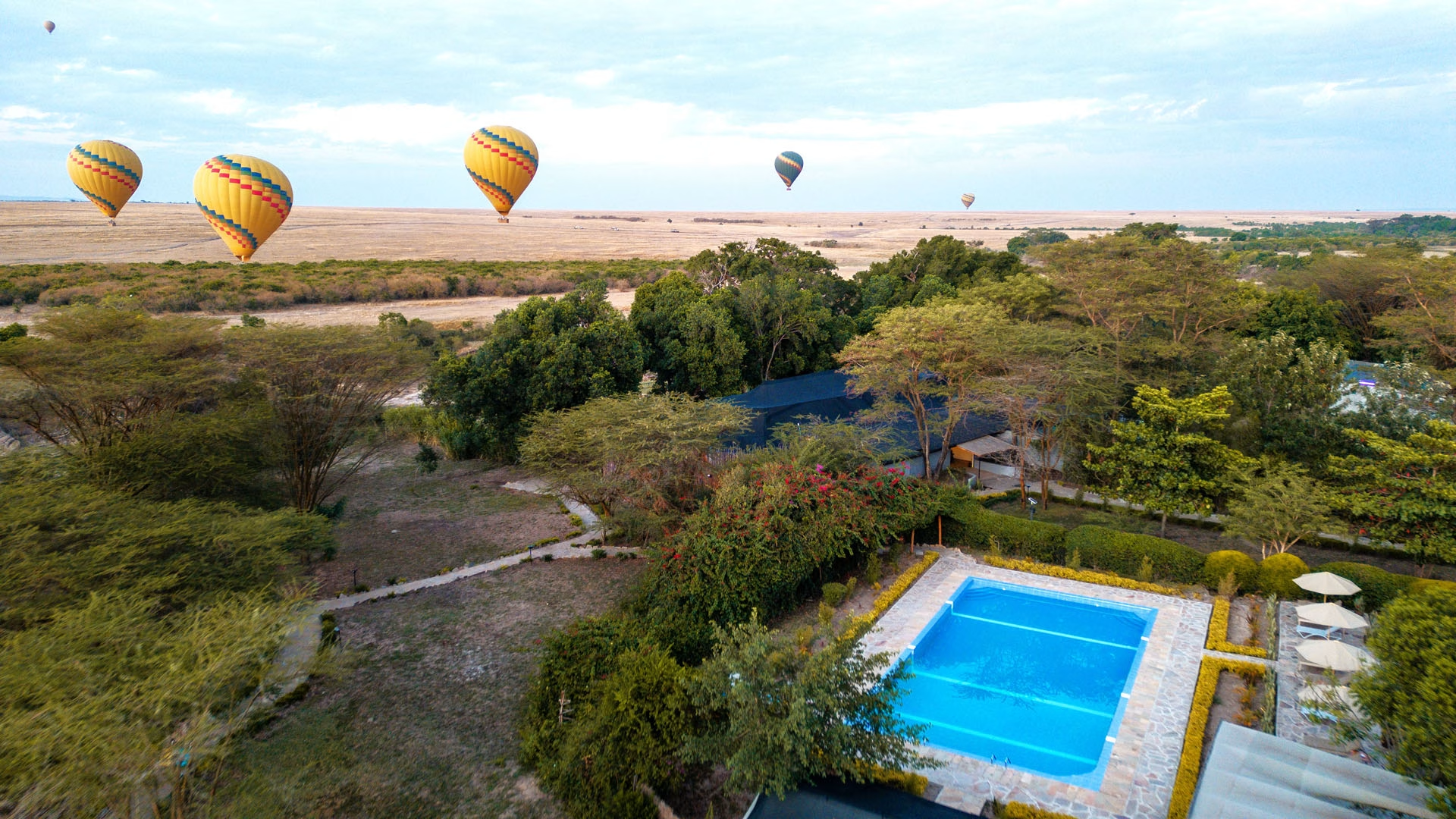
Choose a luxury tented camp for a closer-to-nature atmosphere, a smaller guest count, and a stronger sense of wilderness immersion. Choose a safari lodge for more permanent facilities, larger shared spaces and predictable amenities. The better booking depends on location, service level and itinerary—not the word tent or lodge alone—so compare inclusions carefully.
A Kenya safari is shaped as much by where you wake up as by what you see on a game drive. The accommodation you choose affects the rhythm of the day, your distance from wildlife areas, your privacy, the atmosphere around dinner and the time it takes to reach the next destination.
Many travelers assume the distinction is simple: a tented camp is adventurous, while a lodge is comfortable. That is no longer true. Kenya has tented camps with private plunge pools, full en-suite bathrooms, elegant dining and deeply personal service. It also has safari lodges with dramatic wilderness settings, intimate suites and far more character than a conventional hotel.
The right decision is not about whether you are willing to “rough it.” It is about deciding what kind of safari experience you want, then comparing properties at the same price point and in the same location.
Tented camp vs safari lodge: the essential comparison
| Feature | Luxury tented camp | Safari lodge |
|---|---|---|
| Structure | Canvas or tented suites, usually on a permanent or semi-permanent base | Permanent rooms, cottages, suites, or villas built from materials such as stone, wood, or brick |
| Wilderness atmosphere | Often feels more immediate, with natural sounds and open views central to the experience | Can feel more enclosed and residential, though many lodges remain deeply connected to their setting |
| Room comfort | May include king beds, en-suite bathrooms, private decks, indoor and outdoor showers, fans or selected climate control | Often offers more consistent climate control, larger bathrooms and a more conventional room layout |
| Shared spaces | Usually smaller and more intimate, with a central mess tent, lounge, bar and dining area | Often has larger lounges, restaurants, bars, pools, spas, gyms or multiple dining spaces |
| Privacy | Can be highly private, particularly at small camps with widely spaced tents | Varies widely; villas and boutique lodges can be very private, while larger lodges may feel more social |
| Power and Wi-Fi | Usually reliable but may operate on set generator or solar schedules in remote areas | Often more consistent, though this varies by property and location |
| Accessibility | Paths may be uneven, with steps, raised decks and natural terrain | Often easier for guests needing stable walkways, ramps and more substantial common areas |
| Best for | Couples, photographers, repeat safari travelers and guests seeking intimacy and immersion | Families, multigenerational groups and guests prioritizing facilities, space or accessibility |
Both formats can be luxurious. Both can offer excellent guiding, attentive service and exceptional wildlife access. Kenya’s tourism offering includes both high-end lodges and luxury tented camps, with properties often designed to blend into the surrounding landscape rather than resemble a city hotel.
The term “luxury tented camp” should not lead you to imagine a basic camping holiday. Our Luxury Tented Camp glossary explains that these stays can include spacious en-suite accommodation, private verandas and high-end service. The key difference is the mood: you hear the dawn chorus, the night insects and, sometimes, distant wildlife more directly than you would behind conventional walls.
What a luxury tented camp really feels like
A well-designed tented camp creates a deliberate balance between comfort and exposure to place. You may wake to the soft sound of birds around the tent, see a river or open plains from your deck, and walk a short distance to an open-sided lounge for morning coffee.
Canvas changes the sensory experience. It does not make the accommodation inferior. It makes the setting more present.
Rooms, bathrooms and sleep comfort
At the luxury end of the market, tented suites commonly include proper beds, high-quality linen, bedside tables, wardrobes, luggage racks, en-suite bathrooms and private decks. Many also include indoor and outdoor showers, freestanding bathtubs, writing desks and solar-powered lighting.
The difference is often in the enclosure rather than the standard of service. Canvas walls carry sound differently from stone walls. You may hear rain more distinctly, notice the wind across the plains and feel more aware that you are in the bush.
For many guests, that is precisely the attraction.
For others—particularly light sleepers, travelers who strongly prefer air conditioning, or guests uneasy with natural night sounds—a lodge may feel more restful. There is no incorrect preference. It is better to be honest about it before choosing a property.
Smaller camps and a more personal rhythm
Luxury tented camps are often designed with fewer guest units than larger lodges. A smaller number of tents can mean a quieter communal area, more familiar interactions with camp staff and a stronger feeling that the day is built around your individual interests.
That does not automatically mean a tented camp has better service. A well-run lodge can be extraordinarily attentive, while a poorly operated camp will not become luxurious simply because it has fewer rooms. But when comparing properties of similar quality, smaller camps often offer a more intimate social rhythm.
This can appeal to:
- Couples seeking a quieter safari atmosphere
- Photographers who want early starts and flexible game-drive conversations
- Repeat travelers who prefer small, characterful properties
- Guests planning a private vehicle or privately guided experience
- Travelers who value location and guiding above extensive facilities
Our existing guide to Luxury Tented Camps in Kenya explores examples across the country. This article is intended to help you decide whether the tented-camp format itself suits the way you want to travel.
When a safari lodge is the better choice
A safari lodge can be the more comfortable and practical option without sacrificing a sense of place. Kenya’s best lodges use architecture, views and thoughtful design to make guests feel connected to the landscape while providing the facilities that some travelers value most.
A lodge may have a more substantial reception area, expansive lounge, formal dining room, swimming pool, spa, gym, wine cellar or multiple accommodation categories. These features can matter a great deal on a longer safari, on a family holiday or when travelers have different activity levels.
More space beyond the room
The lodge advantage often lies outside the bedroom.
A traveler returning from a long morning game drive may value a large shaded terrace, a pool, a spa treatment or the ability to choose between several dining spaces. Multigenerational groups may appreciate a property with larger shared areas, where teenagers, parents and grandparents can spend time together without feeling confined to a small central lounge.
Lodges can also be stronger choices for travelers who are less interested in the “under canvas” feeling and more interested in a settled, hotel-like standard of comfort between game drives.
A practical choice for families
Families should not assume that a lodge is always better. Some tented camps have excellent family tents, private villas and highly experienced staff. But a lodge may offer practical advantages, including:
- Family suites or interconnected rooms
- Swimming pools and larger daytime spaces
- More predictable meal settings
- Easier terrain between room and communal areas
- A wider range of activities for guests who do not want every game drive
- More substantial backup systems for power and connectivity
The decision should reflect the children’s ages, your preferred daily rhythm and how much time you expect to spend at camp. A family that wants two game drives every day may prefer an intimate tented camp in a prime wildlife area. A family with younger children may benefit more from a lodge with a pool, flexible dining and larger shared spaces.
Location changes everything
The most beautiful accommodation is not necessarily the best safari base.
A tented camp in a prime conservancy or deep within a wildlife area may offer far more rewarding game-drive access than a grand lodge outside the park boundary. Equally, a lodge with a well-planned location near the wildlife areas that matter to you may be a better choice than a tented camp requiring a long daily drive.
This is why we never recommend accommodation based on photographs alone.
Inside a park or reserve
Staying inside or immediately adjacent to a protected wildlife area can reduce travel time at the beginning and end of game drives. On a short safari, those saved minutes add up quickly.
For a focused Mara stay, our 3-day Maasai Mara luxury tented-camp safari is a useful starting point for travelers who want a shorter, immersive camp experience. We can also tailor the accommodation and transfer format around your dates, budget and preferred level of privacy.
In a conservancy
A conservancy stay can offer a different type of safari rhythm. Individual conservancies set their own access and activity rules, and selected properties may offer experiences such as guided walks or night drives that are not available in Kenya’s national reserves.
For travelers who value small camps, personalized guiding and lower-density game viewing, a tented camp in a conservancy can be particularly compelling. But it is important to confirm how the property’s location serves your specific itinerary. If you want to spend time in the Maasai Mara National Reserve, for example, we will explain the transfer time, entry arrangements and relevant fees rather than assume a conservancy location is interchangeable with the Reserve.
Near a gateway town
A lodge outside a park or reserve can offer better rates, easier access or larger facilities. It may be a sensible choice for a one-night arrival stay, a road-safari stop or a traveler who wants more conventional hotel amenities.
But there can be a trade-off: gate timings, transfer distances and traffic may limit wildlife-viewing time. We include this in every itinerary comparison. Saving money on a room can be poor value if it regularly costs several hours of game-drive time.
Which stay feels more luxurious?
Luxury is personal. Some guests equate it with a private deck, silence and a canvas suite facing the wilderness. Others want a temperature-controlled room, a swimming pool, generous public spaces and a spa after a long drive.
Neither definition is wrong.
Luxury as immersion
A luxury tented camp often feels special because it puts the landscape at the center of the stay. The design may be minimal in the best sense: the room is beautiful, but the sunrise, riverbank, acacia woodland or open savannah remains the focal point.
This style suits travelers who prefer:
- Intimate, low-key service
- A stronger sense of being in the wilderness
- Fewer guests and quieter communal spaces
- Characterful design rather than large-scale facilities
- Long, unhurried conversations with guides and camp staff
Luxury as choice and ease
A luxury lodge often feels special because it offers more ways to spend the day. You may have more room types, facilities and common areas, along with a sense of architectural permanence.
This style suits travelers who prioritize:
- A pool, spa, gym or substantial lounge
- More predictable connectivity and electricity
- Larger suites or villa-style accommodation
- Greater ease for guests with limited mobility
- A more conventional hotel experience between safari activities
The answer may change as your trip unfolds. Many of our strongest Kenya itineraries combine accommodation styles: a lodge in one destination for space and facilities, followed by a small tented camp where the wildlife setting and intimacy matter most.
Safety, children and mobility
Luxury tents are safe when the camp is professionally managed and guests follow the staff’s guidance. Tented camps are not open campsites: they have trained teams, established guest procedures, escorted movement after dark where required and clear safety briefings.
At night, listen to the camp staff. Do not walk between your tent and communal areas alone unless the camp specifically says it is safe to do so. Keep tent doors closed, do not leave food outside and allow the team to guide you if wildlife is nearby. Kenya Wildlife Service’s visitor guidance emphasizes responsible conduct in wildlife areas, including respecting park regulations and avoiding disturbance to animals.
For children, ask us about the camp’s age policy, family tents, private dining options, child-friendly game-drive arrangements and pool safety. Some tented camps welcome families warmly; others are designed primarily for adults or have minimum-age requirements.
For mobility needs, do not rely on the word “lodge” as a guarantee of accessibility. Ask about:
- The distance and surface between rooms and common areas
- Steps, ramps, raised decks and uneven pathways
- Bathroom configuration and grab rails
- Vehicle access and transfer support
- Availability of ground-level rooms
- The length and frequency of game drives
We will collect these details before recommending a property.
How to compare two quotes fairly
A tented camp and safari lodge can have similar nightly rates but very different total value. One quote may include all meals, drinks, laundry, park fees and shared game drives; another may exclude most of them. One property may be in a prime conservancy, while another may require lengthy transfers to the wildlife areas you want to explore.
Compare the complete itinerary—not the headline accommodation rate.
| What to compare | Why it matters |
|---|---|
| Exact location | Determines transfer time, wildlife access and whether additional entry fees may apply |
| Accommodation category | “Tent” and “room” can cover everything from comfortable to ultra-luxury |
| Meals and drinks | Full board, house drinks and premium beverages vary widely |
| Game drives | Confirm whether the vehicle is shared or private and how many guests travel together |
| Park and conservancy fees | These can materially affect the total trip cost |
| Flights and transfers | A cheaper room can become less attractive once domestic flights or long road transfers are added |
| Laundry and extras | Inclusions differ, particularly at high-end camps and lodges |
| Family or single supplements | Room configuration can change the final per-person rate substantially |
| Cancellation terms | Review deposit requirements, amendment conditions and cancellation deadlines before confirming |
The word “all-inclusive” also needs examination. Ask what it includes: meals, drinks, laundry, activities, transfers, conservation fees, private guiding and flights may all be treated differently by different properties.
Which is better during migration season?
During the migration season, location usually matters more than the accommodation format.
A tented camp in the right wildlife area can put you close to early-morning activity and reduce the time spent traveling to game-drive zones. A lodge in an equally strategic location can do the same. The important question is how the camp or lodge works with your overall Mara plan.
For travelers seeking classic National Reserve access, we can recommend properties suited to daytime game drives in the wider Mara landscape. For guests prioritizing intimacy, flexible activities and a smaller camp atmosphere, a conservancy-based tented camp may be the stronger choice.
Do not choose based on a promise of a Mara River crossing. The Great Migration follows natural conditions and animal movement; no camp, lodge or guide can guarantee a crossing at a particular time. Instead, choose an itinerary that gives you enough nights, knowledgeable guiding and the right location to enjoy the Mara’s complete wildlife experience.
Compare camps and lodges with us
The right safari stay is the one that supports the trip you actually want to have. A tented camp may offer the intimacy and immersion that make a honeymoon or photography safari exceptional. A lodge may offer the facilities, room choice and accessibility that make a family or multigenerational trip more comfortable.
Tell us your travel dates, group size, preferred destinations, budget range and non-negotiables—whether that is a private vehicle, a pool, family accommodation, a small camp, a fly-in transfer or a particular wildlife experience. We will compare suitable camps and lodges clearly, including their location, inclusions and practical trade-offs.
Contact our safari specialists to start planning, or message us on WhatsApp to discuss the right Kenya safari accommodation for your itinerary.
FAQs
Do luxury tented camps have private bathrooms?
Yes. Most luxury tented camps have private en-suite bathrooms, often with flush toilets, hot showers, double basins and, in higher-end suites, indoor or outdoor baths. Amenities vary by property, so we confirm the exact room features before you book.
Are safari tents safe at night?
Yes, provided you follow the camp’s safety guidance. Professionally operated camps have established procedures, trained staff and escorted movement after dark when necessary. Stay within designated guest areas, keep your tent closed and ask for an escort rather than walking alone at night.
Are safari lodges better for families with children?
Sometimes, but not always. Lodges can offer family rooms, pools, larger communal spaces and easier access, while some tented camps offer excellent family tents and more private, flexible experiences. The best option depends on the children’s ages, the camp’s policy and your family’s preferred pace.
Which is better during the migration season: a tented camp or safari lodge?
Neither format is automatically better. During migration season, the property’s location, guiding, game-drive access, and itinerary design matter more than whether it is called a camp or lodge. We recommend choosing the best-positioned accommodation that also fits your comfort and budget priorities.