

Is it safe to travel to Kenya right now? Yes — and the data backs it up. Despite alarming headlines and viral social media claims, Kenya has recorded zero confirmed Ebola cases throughout 2026, according to the Kenya Medical Association, even as a serious outbreak burns through parts of the Democratic Republic of Congo. Yet a wave of confusion, much of it tied to a controversial American quarantine facility in Laikipia, has left travellers second-guessing safari plans that were, in reality, never at risk.
This is the story of how a regional health emergency a thousand miles away, combined with a geopolitically fraught US military project, produced a tourism panic almost entirely disconnected from the actual epidemiology. It's worth untangling, because the facts are reassuring, well-documented, and worth trusting over rumour.
Is There Ebola in Kenya Right Now?
No. As of the latest Ministry of Health update, Kenya has not recorded a single confirmed case of Ebola Virus Disease, despite screening more than 140,000 travellers arriving from affected regions and investigating over 100 suspected alerts — all of which tested negative. This isn't just a Kenyan government talking point: the US Centers for Disease Control and Prevention (CDC) — widely regarded as the world's most trusted authority on travel health risk — has issued Travel Health Notices specifically for the Democratic Republic of Congo (Level 3, "Reconsider Nonessential Travel") and Uganda (Level 2), but has issued no such notice, warning, or advisory for Kenya at any point during this outbreak.
The World Health Organisation's Public Health Emergency of International Concern declaration is similarly scoped to the DRC and Uganda, with Kenya's zero-case status independently corroborated in the WHO Africa regional office's own weekly situation reports. Health Cabinet Secretary Aden Duale has repeated the zero-case reassurance publicly and consistently since May 2026, confirming this status in official statements verified through the Ministry of Health's own press office.
The Kenya Tourism Federation, the apex body representing the country's tour operators, hoteliers and travel agents, echoed the same message in a formal advisory to international partners, stating plainly that "Kenya remains free of any Ebola cases" — a claim that, notably, no independent international health authority has contradicted.
Kenya Ebola Outbreak 2026: Separating Geography From Fear
The actual outbreak is centred nearly a thousand miles from Kenya's safari circuits, in the Ituri, North Kivu, and South Kivu provinces of the Democratic Republic of Congo, driven by the rarer Bundibugyo strain of the virus. The World Health Organisation has classified this as a serious regional public health emergency, and a smaller, related cluster briefly emerged in Uganda before being brought under control. To put the distance in perspective for someone unfamiliar with African geography: the gap between Nairobi's safari circuits and the DRC outbreak zone is comparable to the distance separating London and Rome. A localised outbreak in a neighbouring country's remote province does not put a Maasai Mara game drive at risk, any more than an outbreak in Eastern Europe would threaten a holiday in Paris.
Why Is There a US Ebola Facility in Kenya? The Laikipia Controversy Explained
Here's where most of the confusion actually originates — and it has almost nothing to do with an outbreak inside Kenya. In late May 2026, the US government, under an agreement with President William Ruto's administration, announced plans to build a 50-bed quarantine facility at Laikipia Air Base near Nanyuki, intended specifically to isolate American citizens — aid workers, military personnel, or diplomats — who may have been exposed to Ebola while working in DRC. The facility was never designed to treat Kenyan patients or respond to a domestic Kenyan outbreak; it exists because the Trump administration would not permit potentially exposed US citizens to fly directly home.
The project triggered fierce backlash.
Kenya's High Court issued a stop-work order within days of the announcement, and when construction continued regardless, Health CS Duale was later held in contempt of court. Protests in Nanyuki turned deadly, with three people killed in clashes with police over the course of several demonstrations in June 2026, dramatically escalating public anxiety about the project — anxiety about sovereignty and colonial-era grievances tied to the land, not about an actual local infection.
As Kenya's Ministry of Health itself has stated, the facility is a precaution, not a symptom: "these facilities do not mean Kenya has an Ebola case," Duale said, comparing it to buying fire trucks before a fire starts.
Is Kenya on the CDC or WHO Ebola Travel Warning List?
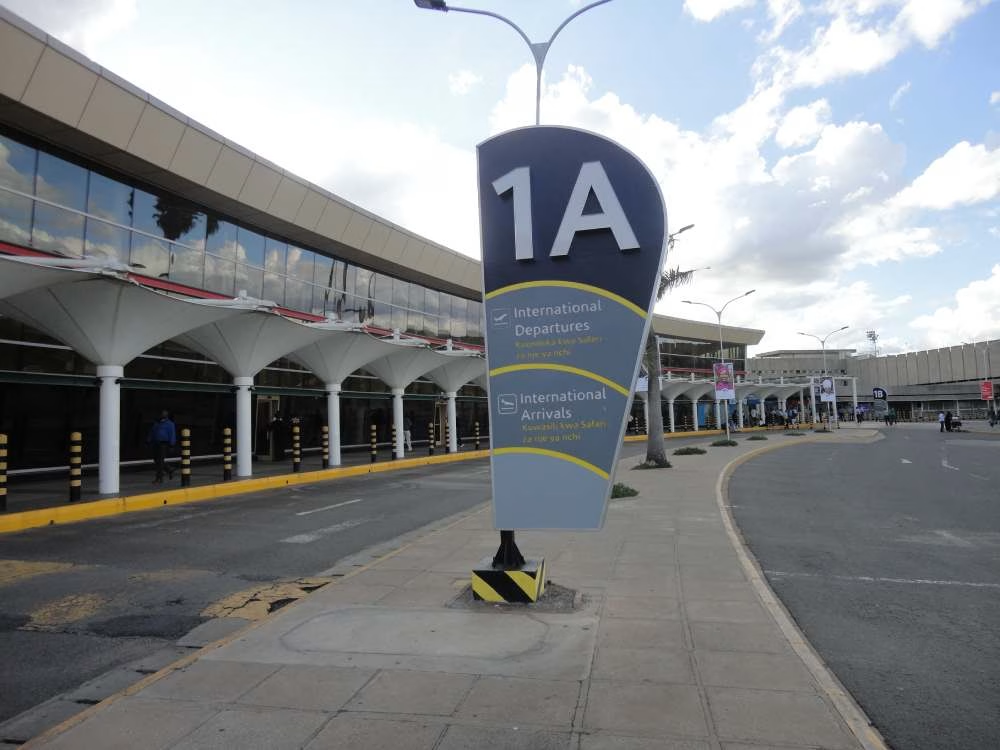
No. The World Health Organisation's emergency declaration applies to the outbreak zone in DRC, not to Kenya, and no international body has issued a travel advisory against visiting Kenya on Ebola grounds. What travellers will encounter are precautionary layers: the Kenya Civil Aviation Authority has mandated enhanced screening protocols at entry points, including thermal scanning and health declaration forms at Jomo Kenyatta International Airport and major land borders.

Is It Safe to Go on Safari in Kenya? What About the Maasai Mara?
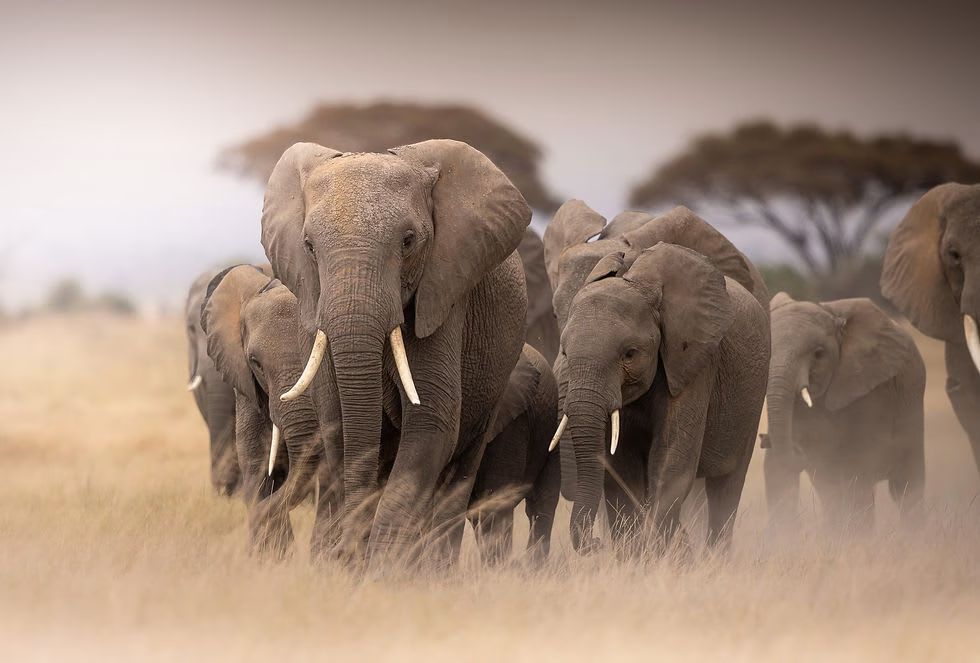
Absolutely. The Maasai Mara, Amboseli, and Kenya's coastal resorts sit nowhere near any affected region, and normal safari activity — game drives, lodge stays, guided walks — carries no elevated Ebola risk. If you're planning to explore [Kenya's Maasai Mara], the itinerary and experience remain exactly as they were before this outbreak began.saunterlandtours+1
How Ebola Actually Spreads (And Why Tourists Aren't at Risk)
Much of the fear stems from a basic misunderstanding of transmission. Ebola spreads only through direct contact with the bodily fluids of a person who is already symptomatic — not through the air, casual contact, food, or wildlife viewing from a safari vehicle. The Kenya Tourism Federation has been explicit on this point: despite multiple Ebola outbreaks across Africa over several decades, there is no confirmed or well-documented case of a tourist contracting Ebola while undertaking normal tourism activities such as safaris, sightseeing, or hotel stays.
Kenya's Entry Requirements and Screening Measures in 2026
Travellers should expect standard precautionary steps rather than restrictions: temperature screening on arrival, a health declaration form, and possible follow-up questions if you've recently transited through DRC or Uganda. These measures exist at 23 designated centres nationwide as part of Kenya's broader disease-preparedness framework, a system Kenya has maintained for years independent of this specific outbreak.
Where the Misinformation Is Coming From
Much of the panic has been amplified by fabricated claims circulating on WhatsApp and social media — including fake images purporting to show Ebola treatment centres and false reports of confirmed cases in specific counties, several of which have been formally debunked by health officials and regional fact-checking networks. Tourism stakeholders have been outspoken that it's the misinformation, not the actual health situation, doing the damage to bookings.
Should You Cancel Your Kenya Safari?
No — and Kenya's tourism authorities are saying so directly. The Kenya Tourism Federation has explicitly urged "intending visitors and travel partners to proceed with their travel plans," while Tourism Principal Secretary Julius Bitok has publicly stated the country is "safe, and ready to welcome you". If you're weighing safari package options or comparing Maasai Mara costs, there is no health-related reason to delay.
Kenya's Ebola-Free Status, Confirmed
As of August 2026, Kenya's Ebola preparedness infrastructure — enhanced surveillance, expanded lab capacity, and trained response teams — reflects proactive investment, not evidence of risk. Uganda's related outbreak has since been declared resolved, and while Kenya maintains heightened vigilance at border points given the continuing situation in DRC, its own case count remains, and has remained throughout, exactly zero.
If you're planning your first trip and want further reassurance, contact us via phone call or WhatsApp to speak to one of our representatives regarding safari preparation, logistics, timing, and what to expect on the ground.